Muay Thai is often called the "art of eight limbs": two fists, two elbows, two knees and two shins. The phrase is accurate, but it does not fully explain what makes the sport so effective, or why it carries such a strong cultural identity.
At Khunpon Martial Arts in Phuket, Muay Thai is taught as a complete discipline. Technique matters, but so do balance, timing, composure, fitness, respect and the ability to work with the person in front of you.
Our gym brings together complete beginners, recreational students, experienced martial artists and fighters preparing to compete. They have different goals, but they share the same space, coaches and training standards. Whether you are visiting Thailand, living in Phuket or preparing for competition, understanding Muay Thai helps you get more from every session.
What is Muay Thai?
Muay Thai is a Thai striking martial art and combat sport. It uses punches, elbows, knees and kicks, with the shin as the main kicking surface. That is where the familiar description "the art of eight limbs" comes from.
At Khunpon, Muay Thai is not taught as a list of techniques. The value of a punch, kick or knee depends on timing, distance, balance and what happens immediately afterwards.
You have to learn to strike without losing your position, defend without becoming passive and move in a way that lets you attack, counter or reset. That is why Muay Thai develops more than striking ability. It builds coordination, conditioning, discipline and awareness.
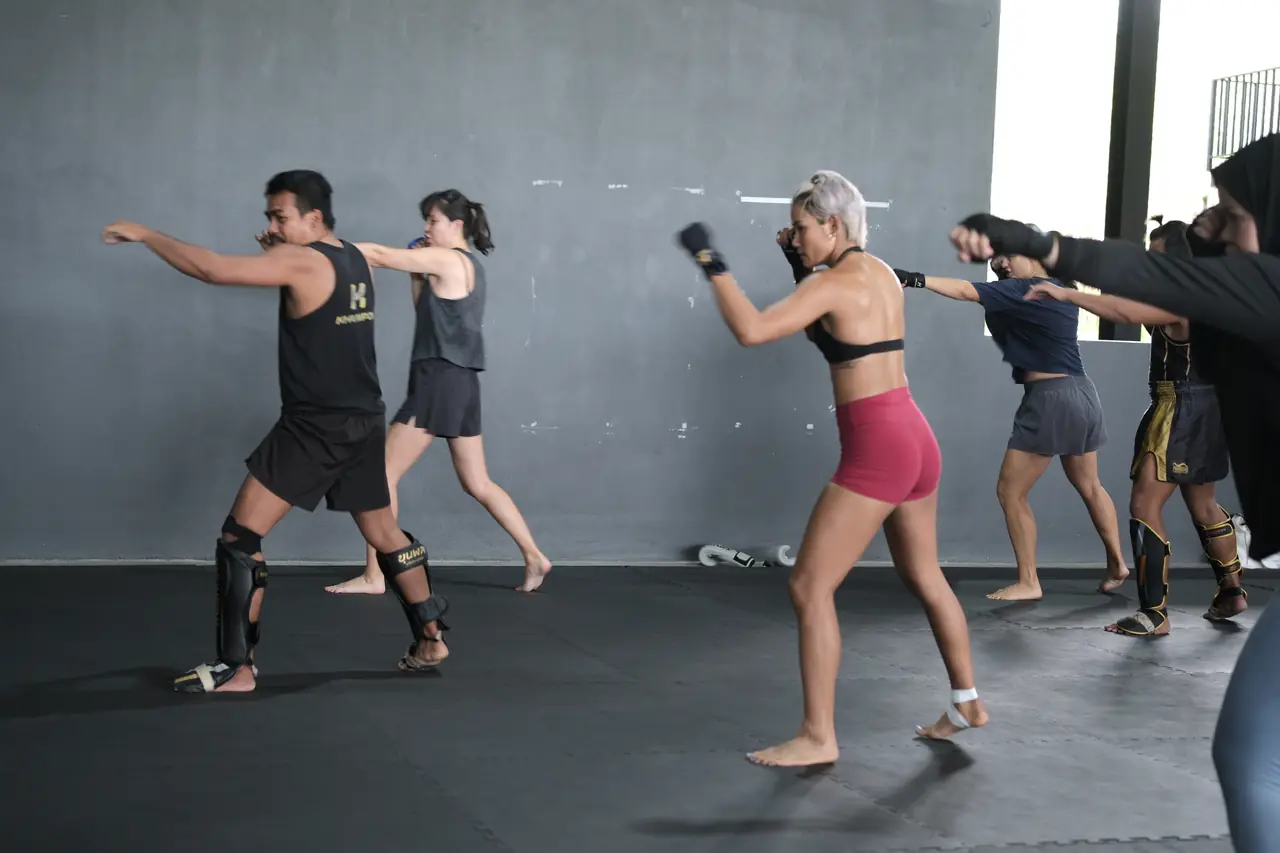
Group classes let beginners learn the foundations while more experienced students keep refining the same principles at a higher level. Private training gives you more focused attention on the parts of Muay Thai that matter most to your goals.
How did Muay Thai develop?
Muay Thai has no single agreed founding date or inventor. Earlier Thai fighting traditions developed across different regions and periods, and modern Muay Thai emerged gradually through organised competition, rule-making, training systems and national sporting identity.
Muay Boran is now often used as an umbrella term for older or traditional Thai boxing systems. It should not be read as one unchanged martial art that existed identically across Thailand: regional traditions varied, and later institutions helped preserve, organise and reinterpret them.
That distinction matters because learning Muay Thai involves more than copying movements. You are learning a living discipline shaped by generations of teachers, fighters and communities. Its history gives the technique context, and training gives you a practical way to understand it.
Historian Peter Vail has examined how Muay Thai became tied to Thai national identity and how later institutions formalised particular versions of its history. His work lets us respect Muay Thai's traditions without presenting every legend as established fact. The same balance shapes how Muay Thai is approached at Khunpon: respect for its Thai origins, curiosity about how it developed and attention to how it is practised today.
By the early twentieth century, Muay was moving towards the structure recognised today, with organised contests, rings, timed rounds, weight divisions, referees and padded gloves. Rajadamnern Stadium, which opened in 1945, became one of the key institutions in formalising and promoting professional Muay Thai, and its historical archive records the publication of a professional rule book in 1955.
Stories such as that of Nai Khanom Tom remain important in Muay Thai's cultural memory, and are best presented as traditional accounts unless the historical details can be supported independently. The wider history is best understood as a mix of older fighting practices, regional traditions, modern sporting regulation and national cultural development.
What are the Wai Kru and Ram Muay?
The Wai Kru and Ram Muay are important Muay Thai traditions. Wai Kru can be understood as paying respect to one's teacher. Ram Muay refers to the movements, or boxing dance, performed as part of the ceremony. They are often discussed together, although their form varies between gyms, regions, lineages and events.
Before a fight, a fighter may circle the ring, kneel, bow and perform movements connected to their teacher, gym or tradition. The ceremony can express respect for coaches, family, training partners and the wider Muay Thai community, and it gives the fighter time to focus before competing. The Kru Muaythai Association describes the ceremony's history and meaning.
At Khunpon, fighters preparing to represent the gym can learn the Wai Kru and Ram Muay from our coaches as part of their fight preparation. It is not a performance for an audience. It is a way for fighters to acknowledge the people who helped them reach the ring, and to carry the identity of their gym with them.
The exact movements differ with the fighter's coach, background and preparation, and that variation is part of the tradition. For someone new to Muay Thai, the lesson is straightforward: training is not only about learning to strike. It is also about learning to listen, show respect, train responsibly and understand the culture of the sport.
What makes Muay Thai technique distinctive?
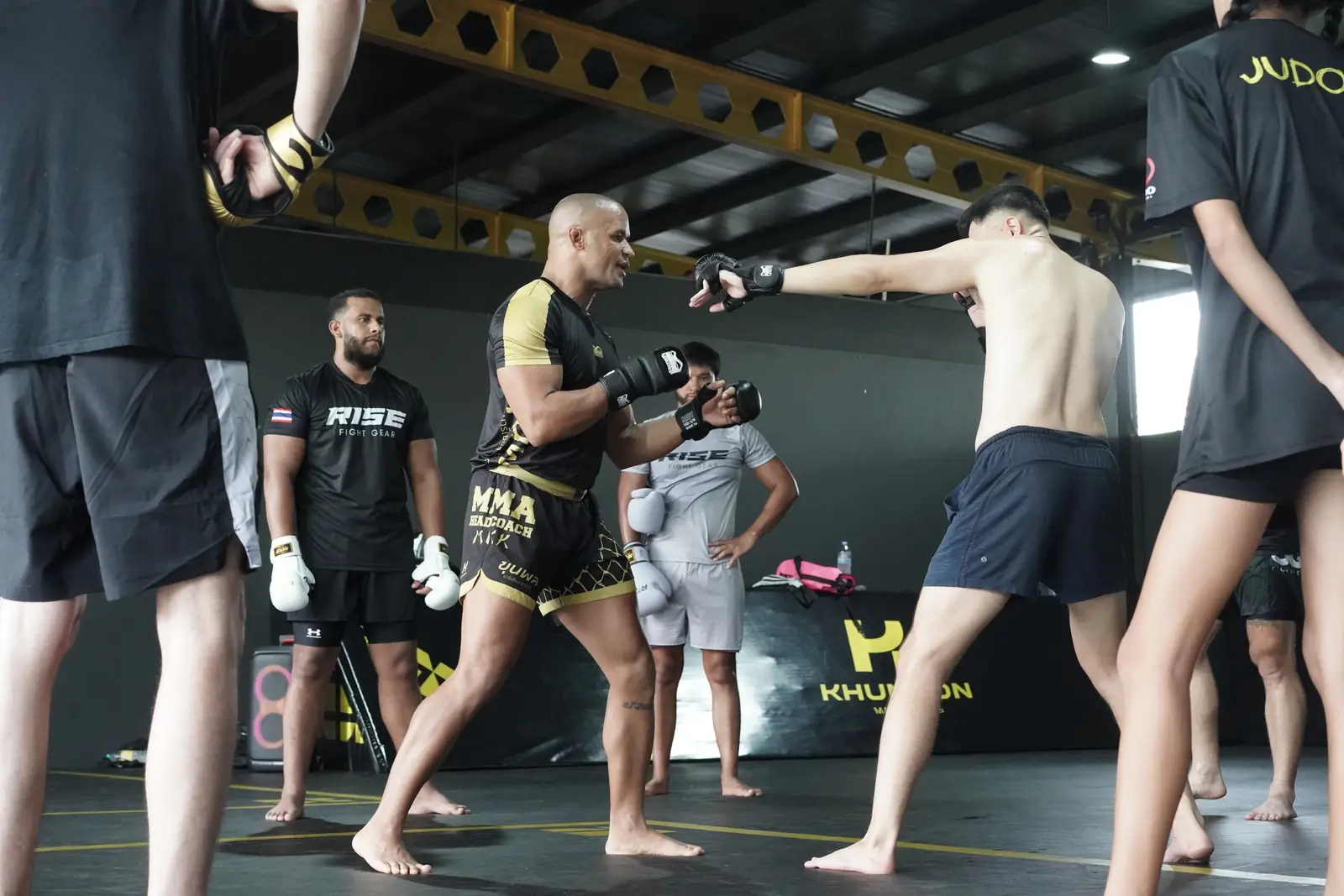
Muay Thai connects striking, movement, defence and close-range control into one complete system. At Khunpon, each of our coaches brings their own technical strengths, experience and teaching style, so you see different ways of understanding Muay Thai: footwork and distance, kicking, punching, clinch work, defensive reactions and fight strategy.
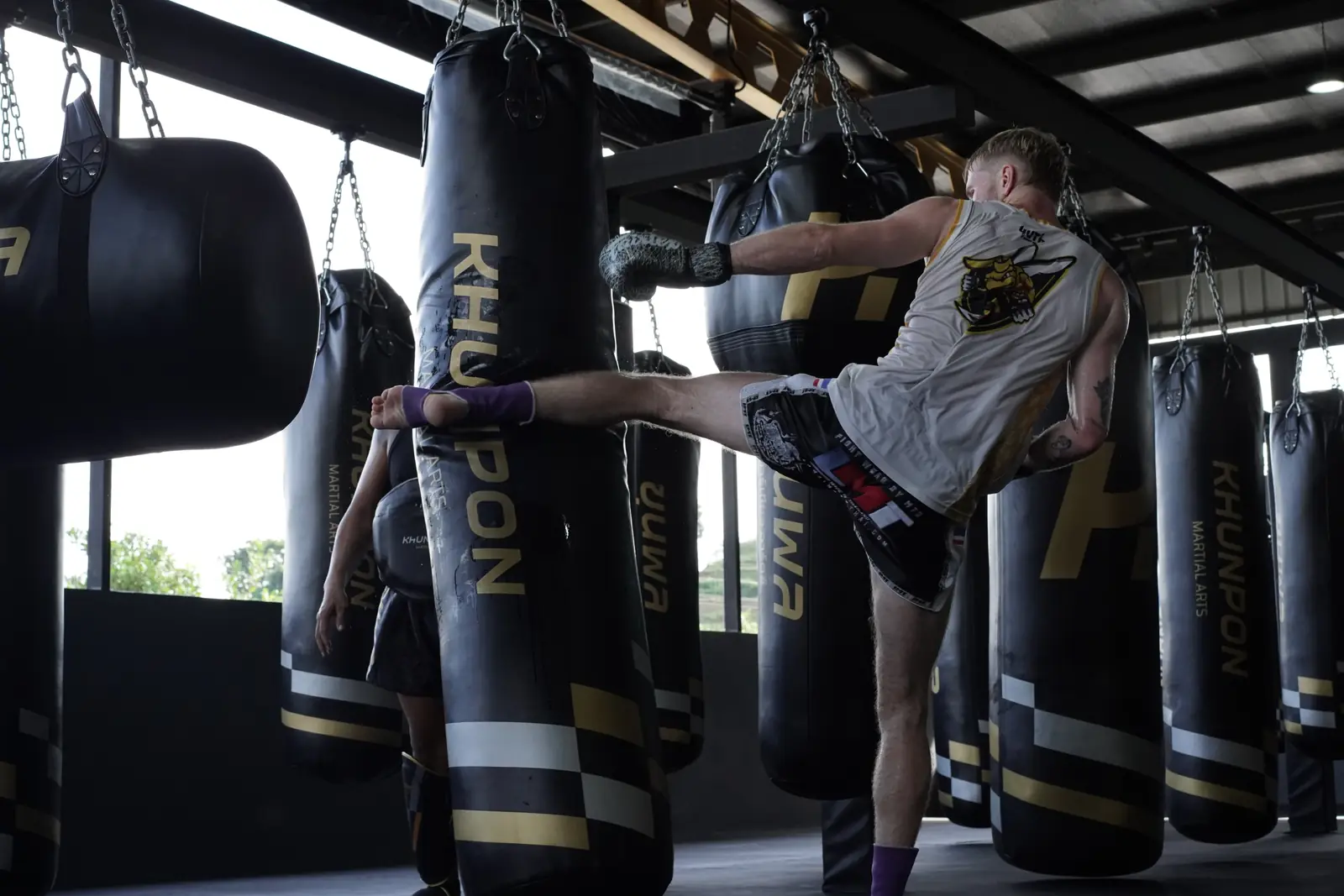
A kick is not only about power. You have to create the right distance, keep your balance, return to a strong position and prepare for the reply. A punch may open the way for a kick, while a teep can stop forward pressure or control the space between two fighters.
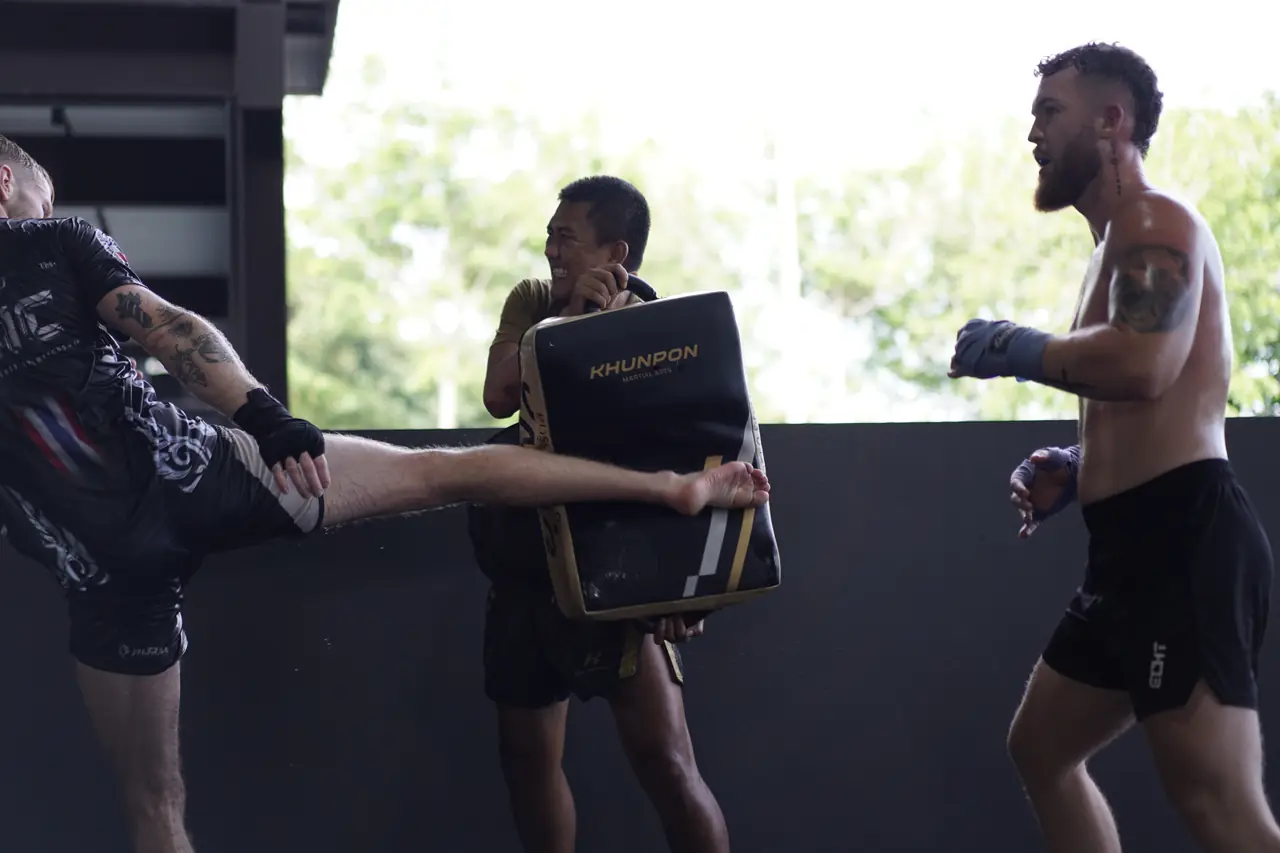
The clinch adds another dimension. At close range, fighters compete for posture, balance, hand position and control while looking for chances to strike with the knees. It is not simply holding on. It is a technical exchange that needs strength, timing and awareness.
Defence matters just as much. Blocks, checks, parries, evasions and small positional adjustments all shape what happens next, and a good defensive action can set up an immediate counter.
This is where training with coaches who have different specialities pays off. One may help you with the detail behind a kick, another may improve your clinch position, and another may test your timing or defensive awareness. Together, those perspectives build a more complete understanding of Muay Thai.
Style labels can describe tendencies, but they are not rigid categories. A Muay Femur fighter is associated with timing, technical variety and tactical intelligence. A Muay Khao fighter may favour knees and sustained pressure. A Muay Mat fighter may rely more on punches. These are useful shorthand, not rules that define every athlete.
How is Muay Thai scored?
Muay Thai does not use one identical scoring system everywhere. Traditional stadium contests, international amateur competitions and global promotions can have different rules, judging criteria, equipment and round structures.
Rajadamnern Stadium's public rules guide describes factors including effective striking, ring control, clinch work, defence and evasion. Throwing the most strikes does not automatically win a fight: judges assess the quality and effectiveness of the exchanges.
For example, ONE Championship's Global Muay Thai Rule Set uses four-ounce MMA gloves, three three-minute rounds for standard bouts and five three-minute rounds for world championship contests. Judges use a 10-point-must system and consider knockdowns, damage, clean strikes, aggression and ring generalship. IFMA competitions run under their own international rules.
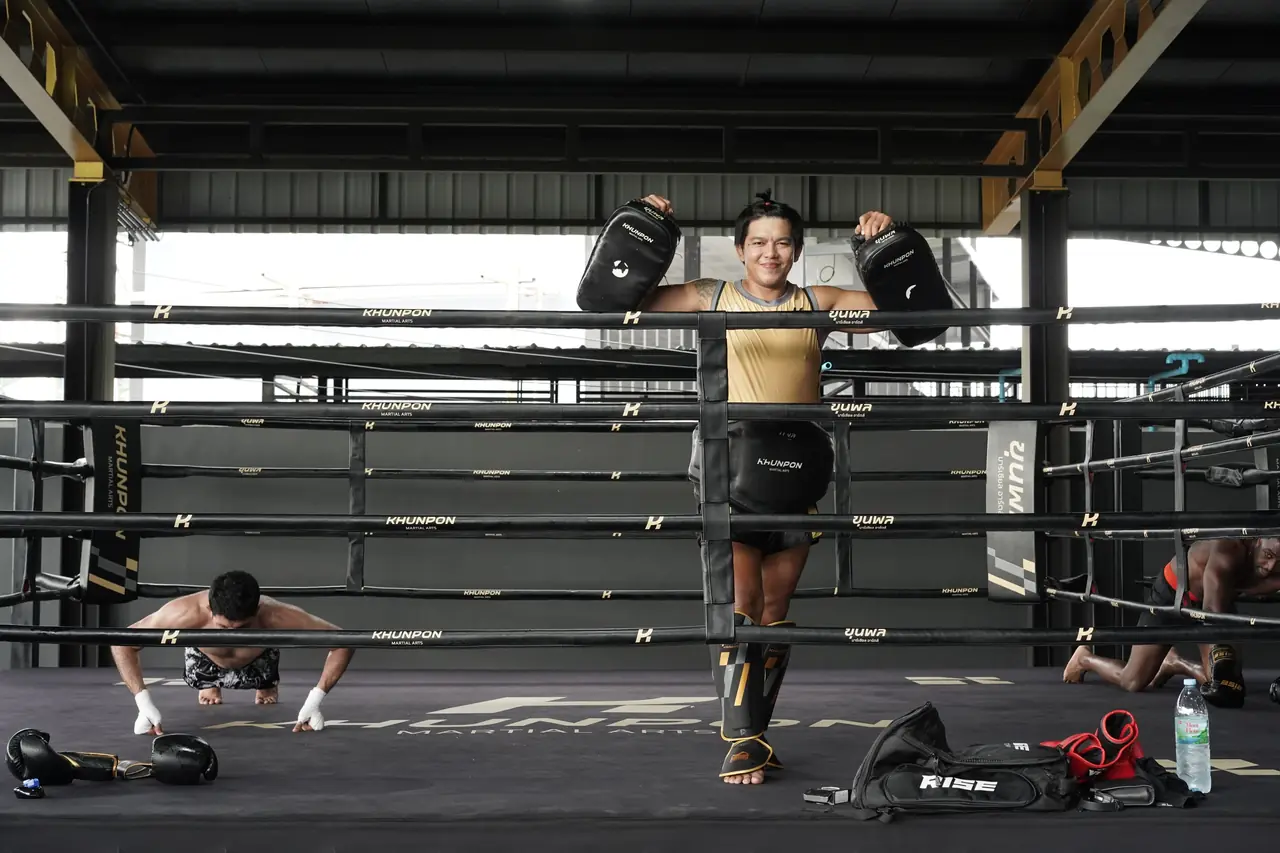
This matters most if you are preparing to compete. Training for a specific event means understanding the ruleset being used, not just general fitness or a collection of techniques. Fighters representing Khunpon adapt their tactics, pacing and decision-making to the demands of their particular contest, and competition preparation always starts with understanding the event, its rules and the level of preparation it needs.
Where Muay Thai is fought at the highest level
Rajadamnern Stadium and Lumpinee Stadium are two of the most historically significant professional Muay Thai venues in Bangkok. Rajadamnern opened in 1945, and Lumpinee was established in 1956.
Their importance comes from more than their age. For generations they have given fighters, trainers and gyms a stage on which to build reputations within Thailand's professional boxing culture. Rajadamnern World Series has helped present Muay Thai to a contemporary international audience, with a modern event format and production while keeping the stadium's identity.
ONE Championship represents a different part of the landscape: it is a global promotion rather than a stadium or governing federation, with rules designed for its own format. Its small gloves and international broadcasts have introduced Muay Thai to many people who first meet the sport through global events.
IFMA represents the international amateur pathway, with particular emphasis on standardised rules, athlete safety, national teams and structured officiating.
These venues and organisations are all Muay Thai, but they are not interchangeable.
| Competition setting | What it represents |
|---|---|
| Rajadamnern Stadium | A historic professional Muay Thai stadium and rule environment |
| Lumpinee Stadium | Another major Bangkok stadium with a long professional tradition |
| Rajadamnern World Series | A modern event series developed around Rajadamnern Stadium |
| ONE Championship | An international promotion with its own Global Muay Thai Rule Set |
| IFMA | An international federation governing amateur competition |
A stadium title, a promotion belt and an IFMA medal each represent a different competitive achievement.
What learning Muay Thai involves
Learning Muay Thai at Khunpon can take different forms depending on your goals, experience and how you like to train.
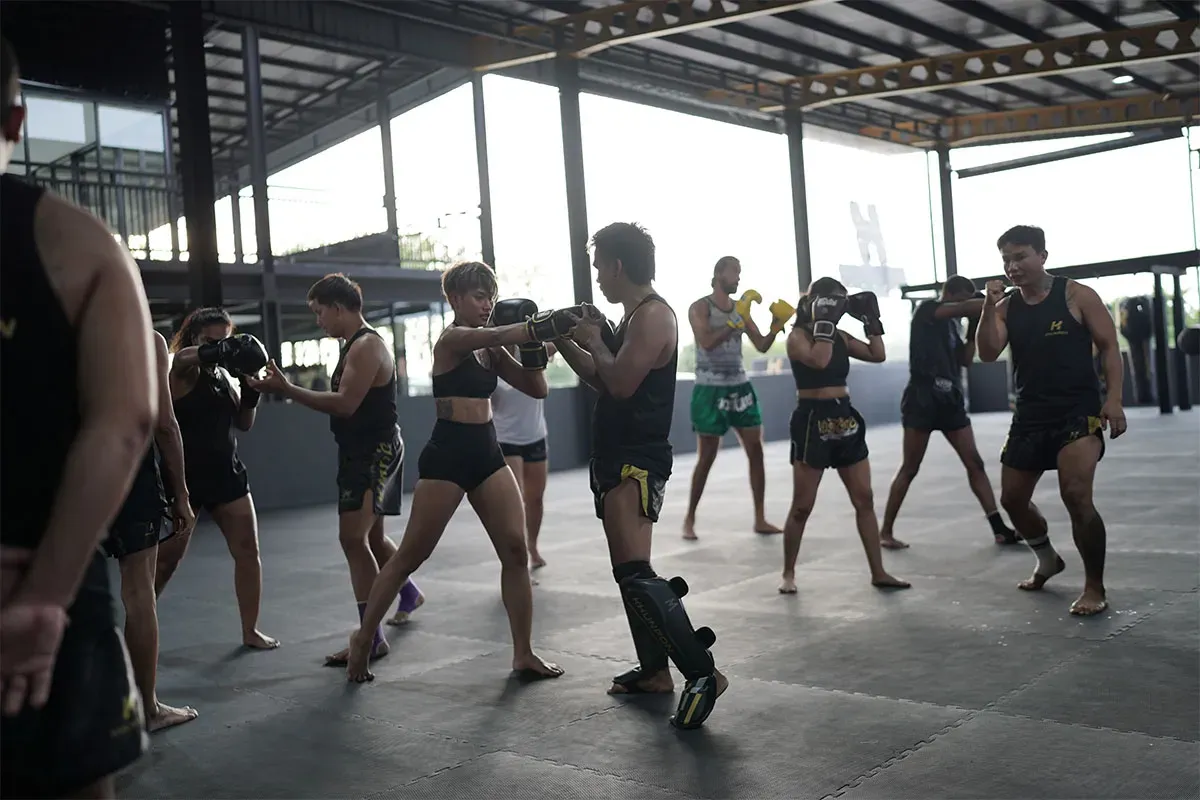
Group classes give you a shared training environment in which to learn fundamentals, practise with partners and build fitness alongside other members. They are also the social side of training: learning together, encouraging each other and getting to know the standards of the gym.
Private PT sessions are more focused. A one-to-one session can sharpen specific techniques, work on movement, build a competition plan or give you more detailed feedback from a coach.
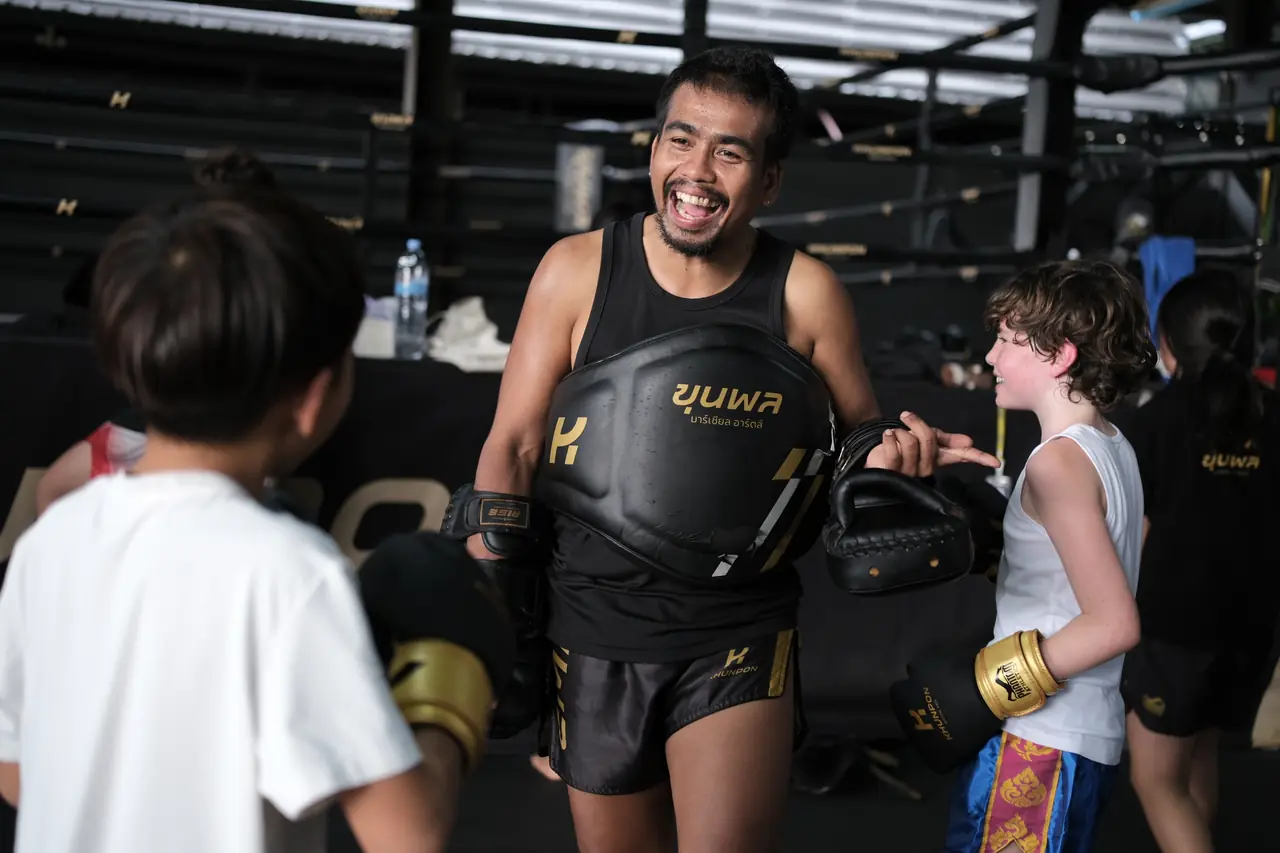
Khunpon brings together people at very different stages. Complete beginners may be learning their first stance or combination, while seasoned professionals refine details that only become visible after years of training. That mix benefits everyone: beginners see where consistent training leads, and experienced students are reminded that every fighter starts with the fundamentals. The atmosphere is challenging without being intimidating, and technical without being unwelcoming.
Training may include:
- Stance, footwork and balance.
- Shadowboxing.
- Pad work with coaches.
- Heavy-bag training.
- Partner drills.
- Defensive movement.
- Clinch development.
- Conditioning.
- Controlled sparring where appropriate.
- Competition preparation for selected fighters.
Not everyone needs to spar or compete. Some people train for fitness, confidence or personal development; others want to prepare seriously for the ring. The aim at Khunpon is to help each person find the right path for their own goals.
Why train in Thailand, and why Phuket?
Thailand is the home of Muay Thai. Training here lets you learn the sport in the country where its modern competitive culture and traditions developed.
That does not mean you must travel to Thailand to learn properly: Muay Thai is practised internationally, and there is excellent coaching in many countries. Training in Thailand is valuable because it puts you closer to the language, customs, coaching traditions and everyday sporting life around the art.
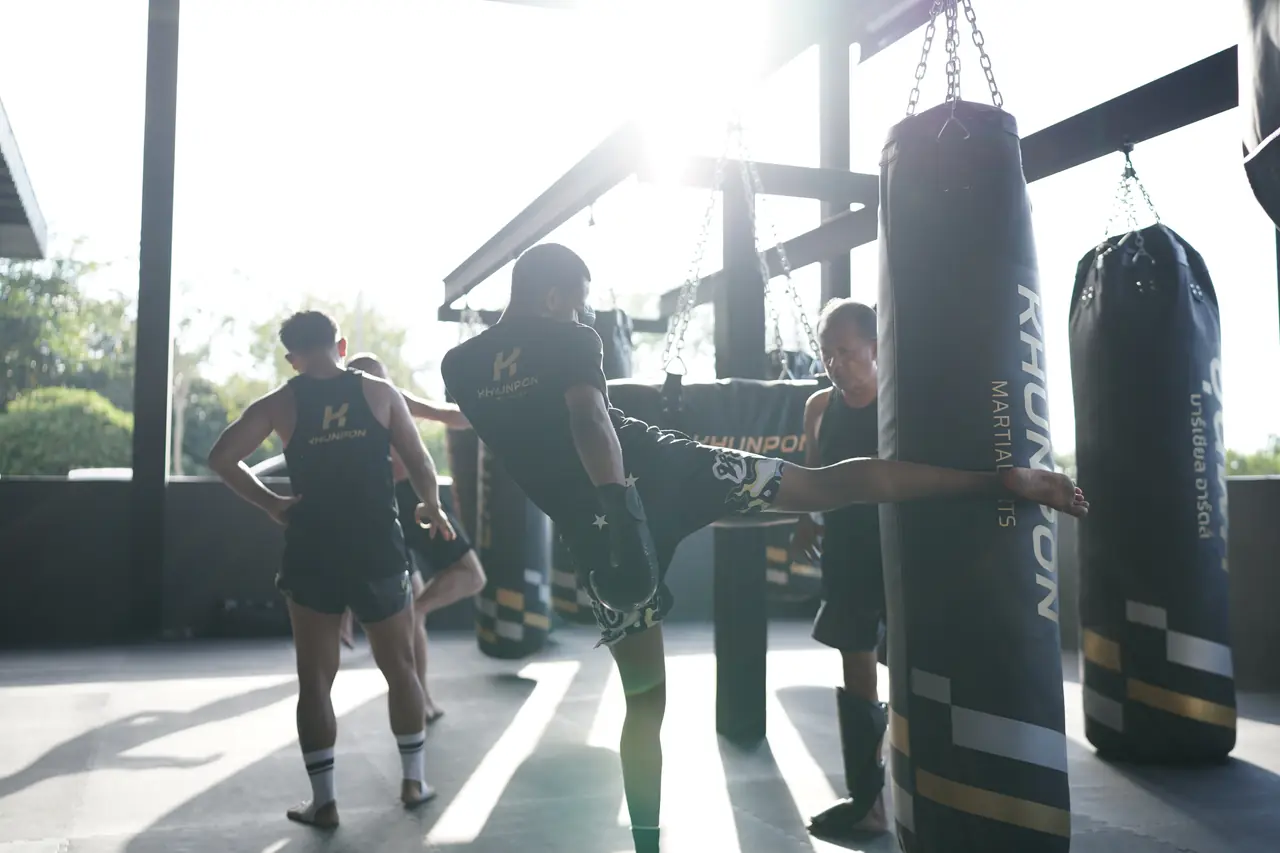
Phuket is a practical setting if you want to combine training with life in southern Thailand. It is also home to a large international community, so you train with people from many countries while learning in a Thai sporting environment. At Khunpon, local members, travelling athletes, recreational students and competitors train within the same community, which keeps the gym connected to Phuket while open to people arriving from elsewhere.
What makes Khunpon different?
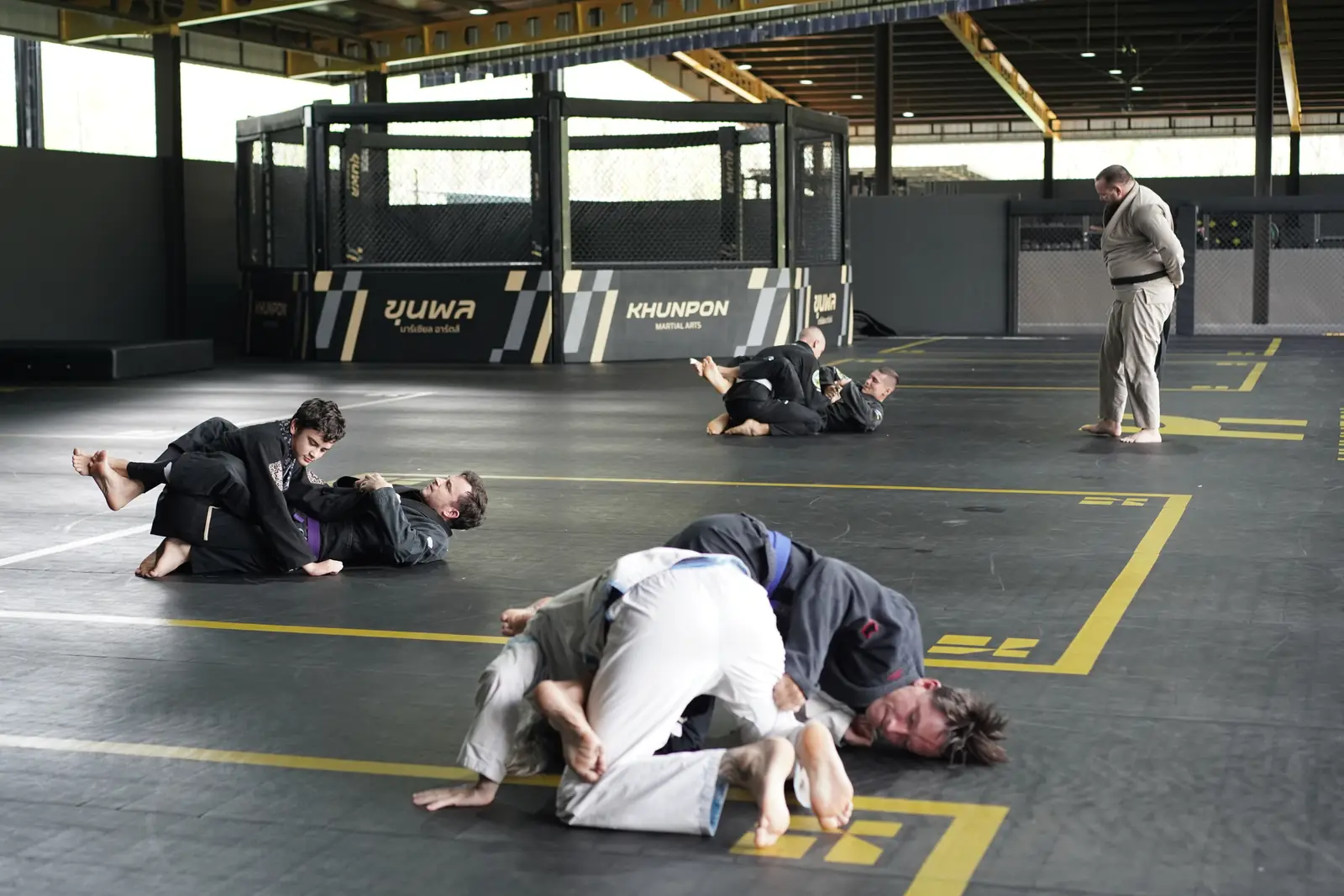
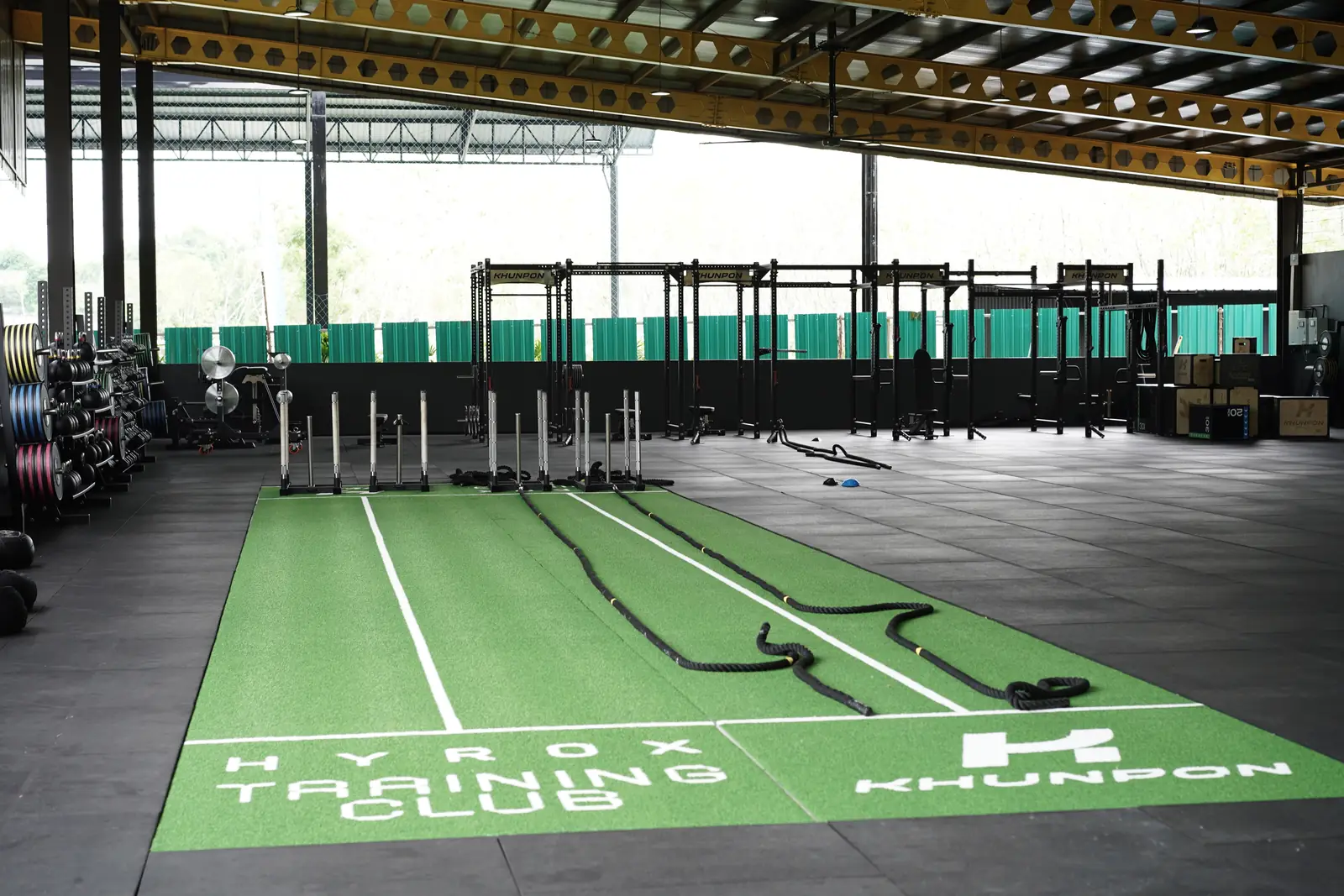
Khunpon Martial Arts is built around more than one discipline and more than one type of member. Alongside Muay Thai, the gym runs MMA, BJJ, No-Gi grappling, HYROX, strength and conditioning, fitness, personal training and open gym training.
That makes for a broader training community. A Muay Thai student may also improve their strength and conditioning. An MMA fighter may develop their striking alongside grappling. A beginner may train in the same room as someone preparing for professional competition.
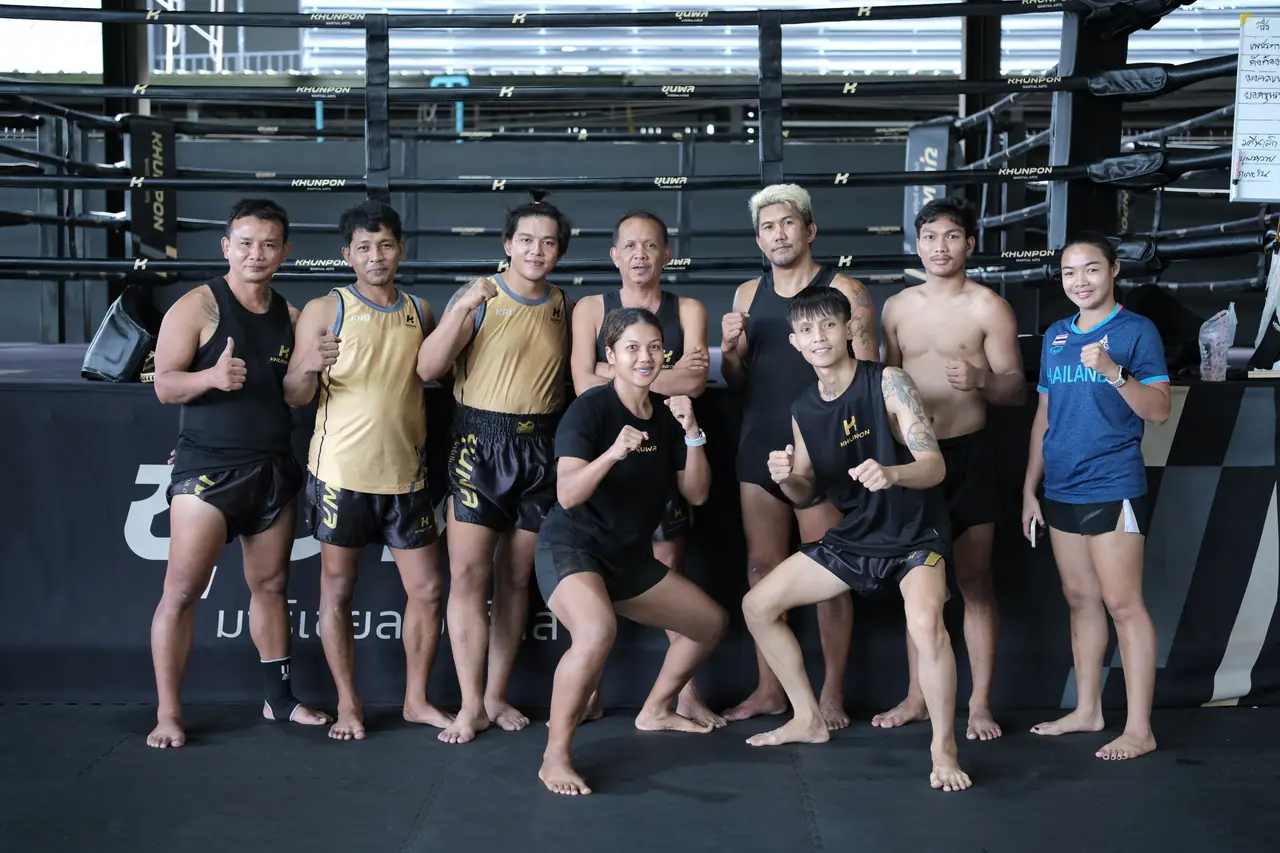
This is what we mean when we call Khunpon a family. It is not a marketing phrase. It is the everyday relationship between coaches, members, training partners and the wider team. People notice when someone is improving. They help a new member find the rhythm of the gym. They support fighters preparing for competition and recognise the work that happens before fight night. The atmosphere comes from shared effort, not from everyone having the same background or objective.
Khunpon gives you different ways to learn. Group classes offer energy, structure and community. Private sessions offer individual attention. Competition preparation is a more focused route for fighters ready to represent the gym.
If you are looking for Muay Thai in Phuket, Khunpon suits people who want a serious training environment without feeling they must arrive as an experienced fighter. The standard is high, but the starting point can be wherever you are.
Training Muay Thai at Khunpon
Khunpon runs Muay Thai group classes and private training in Phuket. Group classes run Monday to Saturday from 08:00 to 09:30, and Monday to Friday from 16:00 to 17:30; the full week is on the timetable.
Whether you are visiting the island, live locally, want to improve your fitness or are preparing for competition, the team can help you choose the right starting point. You train alongside people of every level, from first-time beginners to seasoned competitors, so progress is visible and you keep learning without being put into one fixed category.
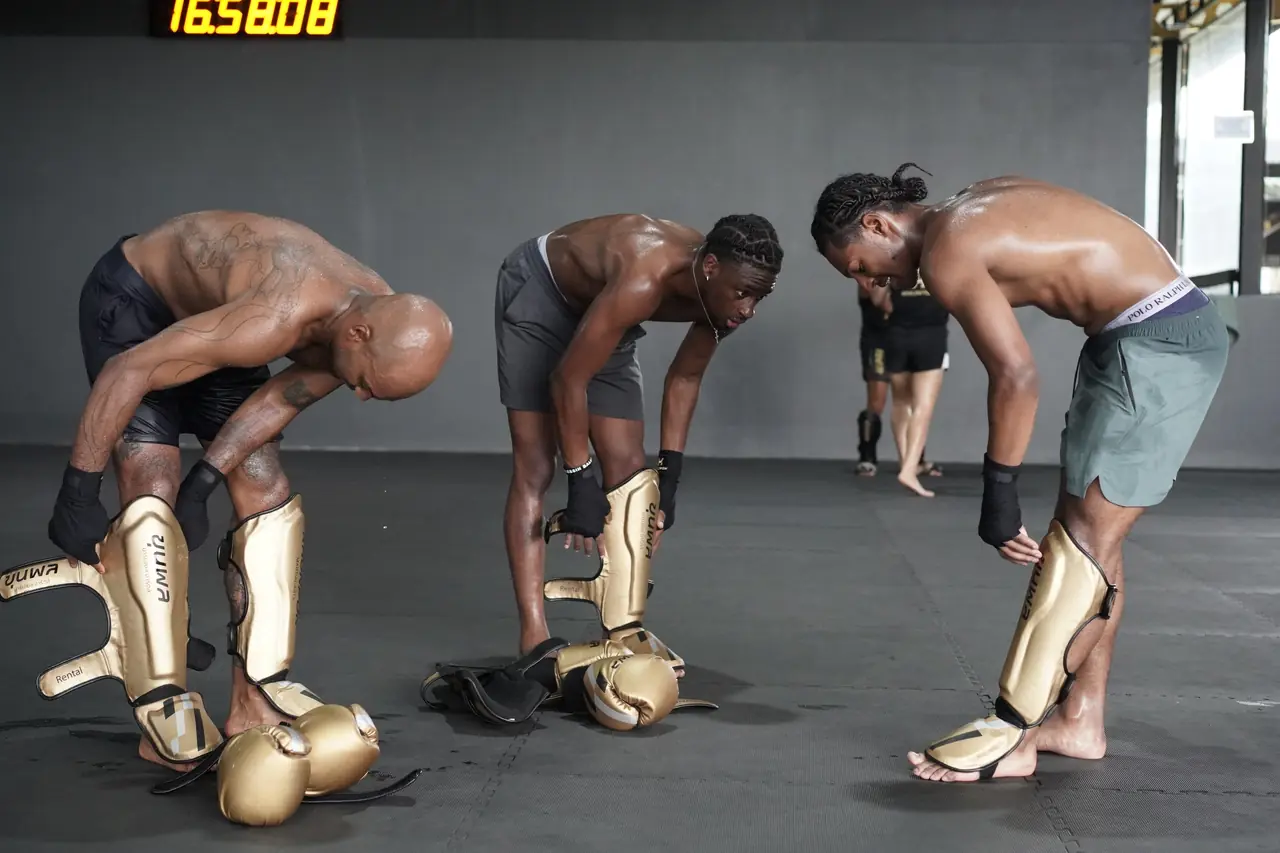
For fighters preparing to compete for Khunpon, training involves more than physical preparation. It includes learning how to represent the gym, work with the coaching team, respect the sport and carry the responsibility of fighting under the Khunpon name.
Understanding Muay Thai before you train
Muay Thai is powerful because its physical and cultural sides stay connected. The fists, elbows, knees and shins make it a complete striking system, but timing, balance, defence and composure give those tools their purpose.
Its history holds both evidence and tradition. Its rituals express respect, but vary between communities. Its competitions share a common identity, but do not all use identical rules.
At Khunpon you can explore all of those sides through group classes, private PT, technical coaching and competition preparation. The aim is not simply to make people hit harder. It is to help them move better, understand more and become capable training partners in a strong community. Muay Thai is not only something to watch or imitate: it becomes clearer through practice.
Start training at Khunpon
Whether you are completely new to martial arts, returning to training or preparing for competition, Khunpon Martial Arts offers Muay Thai group classes and private training in Phuket. Learn the art of eight limbs in a serious, welcoming gym, surrounded by coaches, training partners and a community that wants to see you improve.
See the Muay Thai programme, check prices and memberships, and read what to expect at your first Muay Thai class. Group classes take walk-ins; message the team with any questions or to book a private session.
Glossary
- Art of eight limbs
- A common description of Muay Thai's use of two fists, two elbows, two knees and two shins.
- Clinch
- Close-range grappling used to control posture, position and striking opportunities.
- Kru
- A Muay Thai teacher or coach.
- Muay Boran
- A modern umbrella term for older or traditional Thai boxing systems and regional practices.
- Muay Femur
- A style tendency associated with timing, technical variety, movement and tactical intelligence.
- Muay Khao
- A style tendency that emphasises knee strikes and sustained clinch pressure.
- Muay Mat
- A style tendency associated with strong and frequent punching.
- Mongkhon
- The traditional Muay Thai headband worn during the Wai Kru and Ram Muay.
- Prajiad
- A traditional armband associated with Muay Thai ceremony and identity.
- Ram Muay
- Ceremonial boxing movements performed before a fight.
- Teep
- A push kick used to manage distance, disrupt balance or stop forward movement.
- Wai Kru
- A ceremony of respect towards a teacher, often performed before a fight.
Sources and further reading10
- Royal Thai Government Public Relations Department. Amazing Muay Thai Festival 2024 to Showcase Thai Martial Art to the World.
- Vail, Peter. Muay Thai: Inventing Tradition for a National Symbol. SOJOURN: Journal of Social Issues in Southeast Asia, 29(3), 2014, pp. 509 to 553.
- Rajadamnern Stadium. History and Heritage.
- Kru Muaythai Association. History of the Wai Kru.
- Rajadamnern Stadium. Muay Thai Rules from the First Muay Thai Stadium.
- ONE Championship. Martial Arts Rule Sets.
- International Federation of Muaythai Associations. Muaythai Rules.
- Lumpinee Boxing Stadium. History of Lumpinee Boxing Stadium.
- Wandee, A. et al. Wai Kru Muay Thai: Thai Cultural of Wisdom.
- Khunpon Martial Arts. Muay Thai in Phuket.