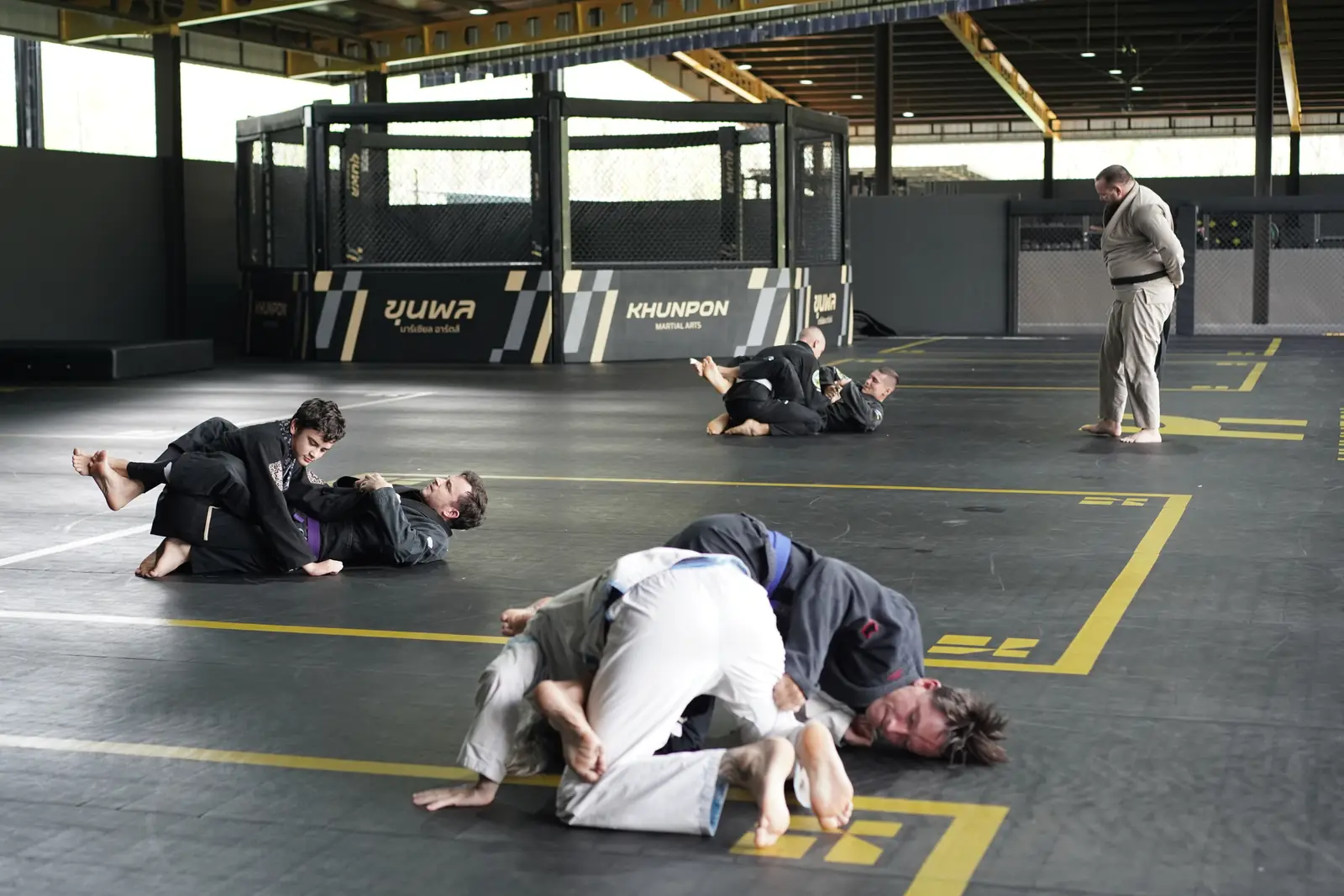
Brazilian Jiu-Jitsu is built around problem-solving. Rather than relying only on size, speed or strength, BJJ teaches you to use leverage, frames, pressure, angles, timing and positional control to manage an opponent and create a chance to submit them.
At Khunpon Martial Arts in Phuket, you can train both Gi and No-Gi Brazilian Jiu-Jitsu inside a wider martial-arts gym that also runs Muay Thai, MMA, strength and conditioning, personal training, group classes and open gym access.
Whether you are completely new to grappling, an experienced martial artist, a travelling athlete or looking for a long-term training community, BJJ at Khunpon gives you a structured way to build technical skill through repetition, resistance and intelligent movement.
What is Brazilian Jiu-Jitsu?
Brazilian Jiu-Jitsu, usually shortened to BJJ, is a grappling martial art and combat sport focused on taking an opponent to the ground, controlling their position and applying a submission.
A typical exchange may involve:
- A takedown.
- Guard passing.
- Side control.
- Mount.
- Back control.
- Escapes and reversals.
- Submission attempts and defence.
A submission is usually a joint lock or choke that makes an opponent tap or verbally concede. The tap is an important safety mechanism: it lets training partners practise dangerous positions again and again without waiting for an injury.
BJJ is often linked with the idea that a smaller person can use technique and leverage against a larger one. That can happen, particularly when the smaller person has better position and timing, but size, strength, athleticism and experience still matter. BJJ does not make physical differences irrelevant. It teaches you how to manage them intelligently.
People come to BJJ at Khunpon for different reasons. Some train for fitness, confidence and enjoyment. Others are interested in sport competition, self-defence, MMA preparation or a broader martial-arts skill set.
Sport BJJ should not be confused with a complete self-defence system. Competition takes place within a defined ruleset, while real-world situations involve variables that may not exist on the mat.
How did Brazilian Jiu-Jitsu develop?
The history of BJJ is international, and more complicated than the familiar claim that one family invented it. Its background includes Japanese jujutsu, the development of Kodokan Judo, international martial-arts demonstrations, Japanese migration and the growth of Brazilian training communities.
Jigoro Kano studied traditional Japanese jujutsu before developing Kodokan Judo in the late nineteenth century, organising throwing and grappling techniques into a modern educational and sporting system. The Kodokan Judo Institute's historical account explains Kano's study of jujutsu and his development of Judo.
It is important not to collapse Japanese jujutsu, Kodokan Judo and Brazilian Jiu-Jitsu into one identical system. They are connected historically, but they developed within different cultures, institutions and rules.
Mitsuyo Maeda, a Japanese martial artist associated with Kodokan Judo, travelled internationally before arriving in Brazil in the 1910s. His teaching, demonstrations and contact with other combat sports formed part of how Japanese grappling reached Brazil.
Jiu-jitsu then developed in Brazil through teaching, adaptation, challenge matches, academies and local sporting culture. José Cairus's scholarly study, Modernization, Nationalism and the Elite: The Genesis of Brazilian Jiu-Jitsu, 1905 to 1920, describes this as a process of introduction, adaptation and globalisation rather than a simple, uninterrupted transfer from Japan to Brazil.
Carlos and Hélio Gracie became highly influential in developing and promoting Brazilian Jiu-Jitsu, but it would be misleading to suggest that one family created every part of the art. BJJ evolved through many instructors, competitors, academies and training cultures, first in Brazil and later around the world.
For further reading, Martial Arts in the Modern World, edited by Thomas A. Green and Joseph R. Svinth, includes the chapter "The Circle and the Octagon: Maeda's Judo and Gracie's Jiu-Jitsu". Robert Drysdale's Opening Closed-Guard: The Origins of Jiu-Jitsu in Brazil also investigates the competing narratives around Maeda, the Gracie family and the development of BJJ. It is a practitioner-led interpretation rather than a neutral academic study, but it is useful read alongside scholarly research and primary sources.
Gi and No-Gi: what is the difference?
Gi and No-Gi BJJ share the same fundamental positions, but the clothing changes the grips you can take, and so it changes the tactics.
| Gi BJJ | No-Gi BJJ | |
|---|---|---|
| Clothing | A traditional jacket and trousers | A rashguard and shorts, or similar athletic clothing |
| Grips | Lapels, sleeves and trousers where the rules allow | No cloth grips |
| Pace | Often a more grip-oriented pace | Often faster transitions and movement |
| Emphasis | Fabric control, posture and grip fighting | Underhooks, overhooks, wrist control, body locks and head position |
| In competition | The Gi and belt are part of the environment | Body control replaces cloth grips |
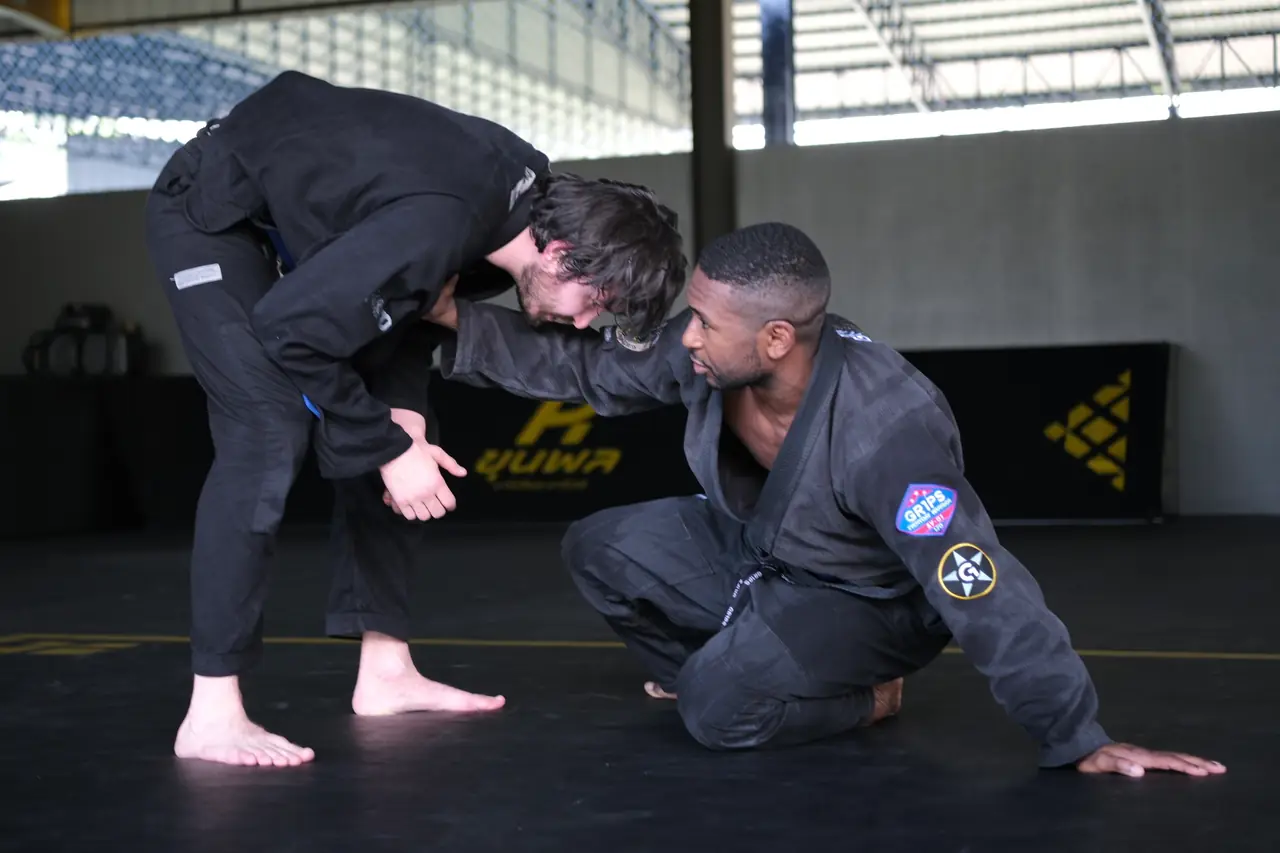
Gi BJJ
The Gi is not simply a uniform. It becomes part of the tactical environment. You can use the lapels, sleeves and trousers to control posture, restrict movement, slow an escape or create angles for passing and submissions.
A grip that looks minor may shape an entire sequence several steps later: the opponent may need to break it before they can posture, pass or escape. Gi training tends to encourage patience, precision and detailed hand fighting. The IBJJF uniform regulations set out the requirements for the Gi and belt in IBJJF competition.
No-Gi BJJ
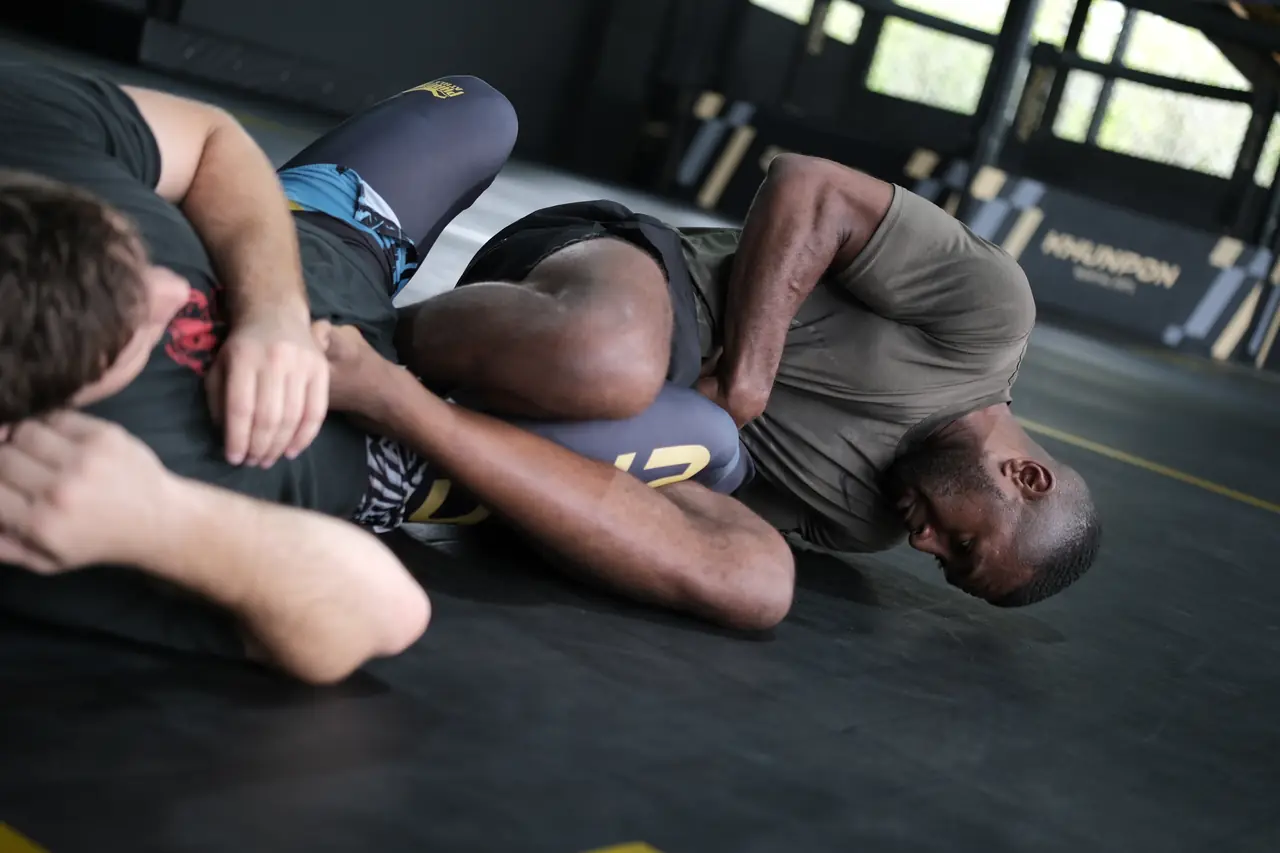
No-Gi removes the cloth grips. You rely more on underhooks, overhooks, wrist control, body locks, head position, pressure and leg positioning.
No-Gi is often associated with faster transitions and modern submission systems, although the pace depends on the athletes and the ruleset. It is also highly relevant to MMA, because the clothing and gripping are closer to a fight.
No-Gi is not simply "Gi without the uniform". Both use the same positional foundations, but they build different gripping habits, movement patterns and strategic choices.
At Khunpon you can train both formats:
- No-Gi BJJ: Monday to Friday, 10:30 to 12:00.
- Gi BJJ: Tuesday and Saturday, 09:00 to 10:30.
The full week is on the timetable. Group classes and personal training are open to all ages and experience levels, from complete beginners to experienced grapplers, as the BJJ programme page explains.
Rules vary between organisations. Heel hooks, knee reaping, leg entanglements, neck attacks and other techniques may be allowed at one level and restricted at another. If you are preparing for a competition, always study the current rules of that specific event.
The space you roll in
BJJ is trained on a defined mat area, sometimes called the mat, the tatami or the competition area. The mat provides:
- Cushioning for takedowns and ground movement.
- Traction for grappling.
- A clean, defined training surface.
- A boundary that helps coaches and officials manage activity safely.
The edge of the mat can matter in competition: depending on the ruleset, a position may be restarted if the athletes move outside the area. ADCC rules, for example, specify a 10 by 10 metre mat area without a cage or fence, and explain how athletes are restarted when they leave it (ADCC Rules and Regulations).
Training spaces do not all use the same dimensions or terms. At Khunpon you learn to move responsibly within a shared training area, protect your head and communicate clearly with your partners.
Mat hygiene matters just as much. Clean clothing, short nails, covered cuts and staying away from training when you have a contagious skin condition all protect the wider community. A good BJJ gym is defined not only by its techniques but by the way people look after the space and each other.
How does a BJJ roll work?
"Rolling" is the usual word for live BJJ practice. A roll can range from cooperative technical work to fully competitive sparring, depending on the experience, health and goals of the people involved. It may start from standing, from seated guard, from a set ground position or from a situation the coach chooses.
A BJJ class commonly includes:
- A warm-up and movement drills.
- Technical instruction.
- Repetition with a partner.
- Positional sparring.
- Live rolling.
- Questions and review.
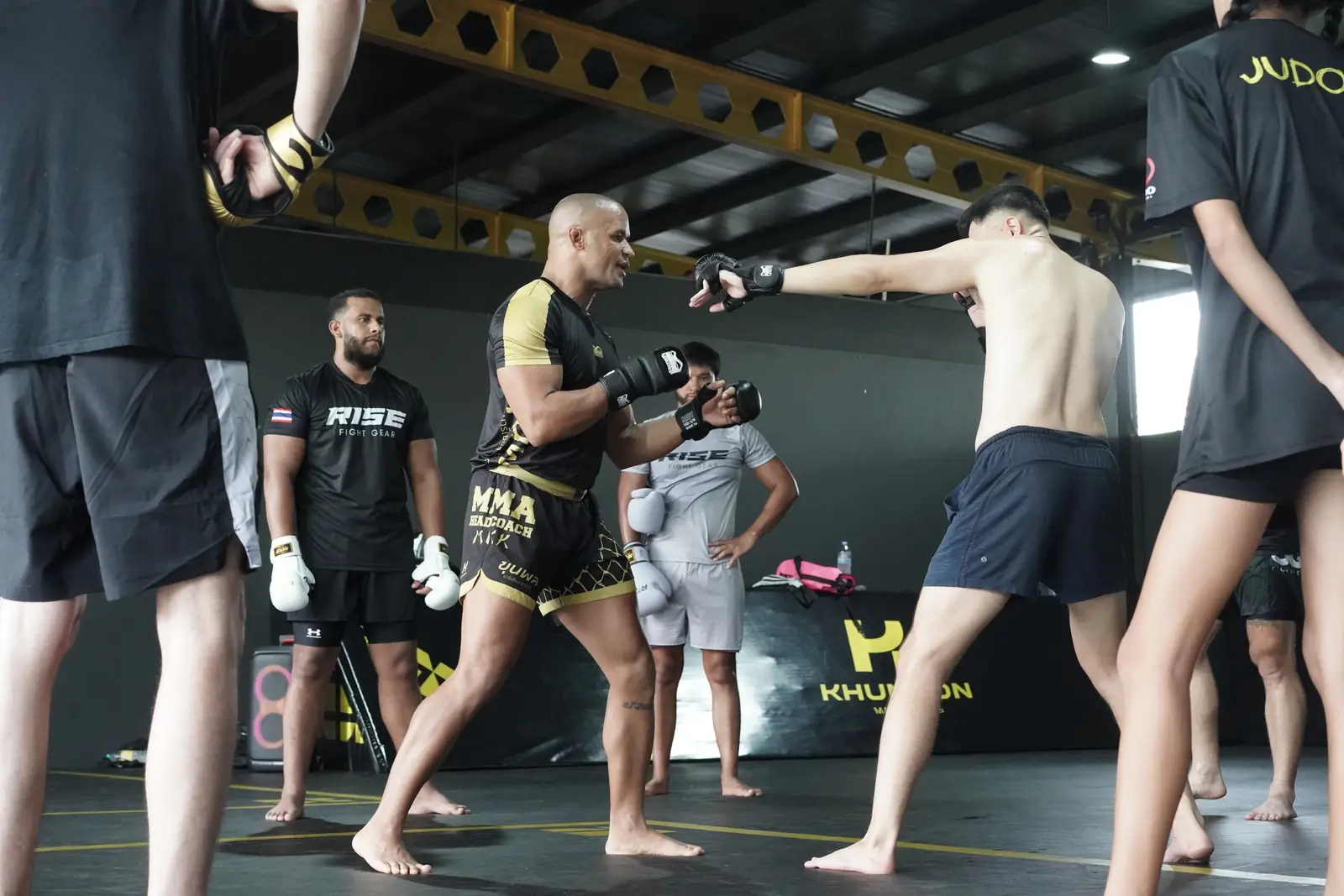
Technical drilling lets you understand a movement without full resistance. Positional sparring starts from a defined situation, such as mount, side control or guard, and gives both partners a clear problem to solve.
Live rolling adds uncertainty. Your partner may defend, change direction or find a counter that was never there in drilling. This is where timing, pressure and decision-making start to matter.
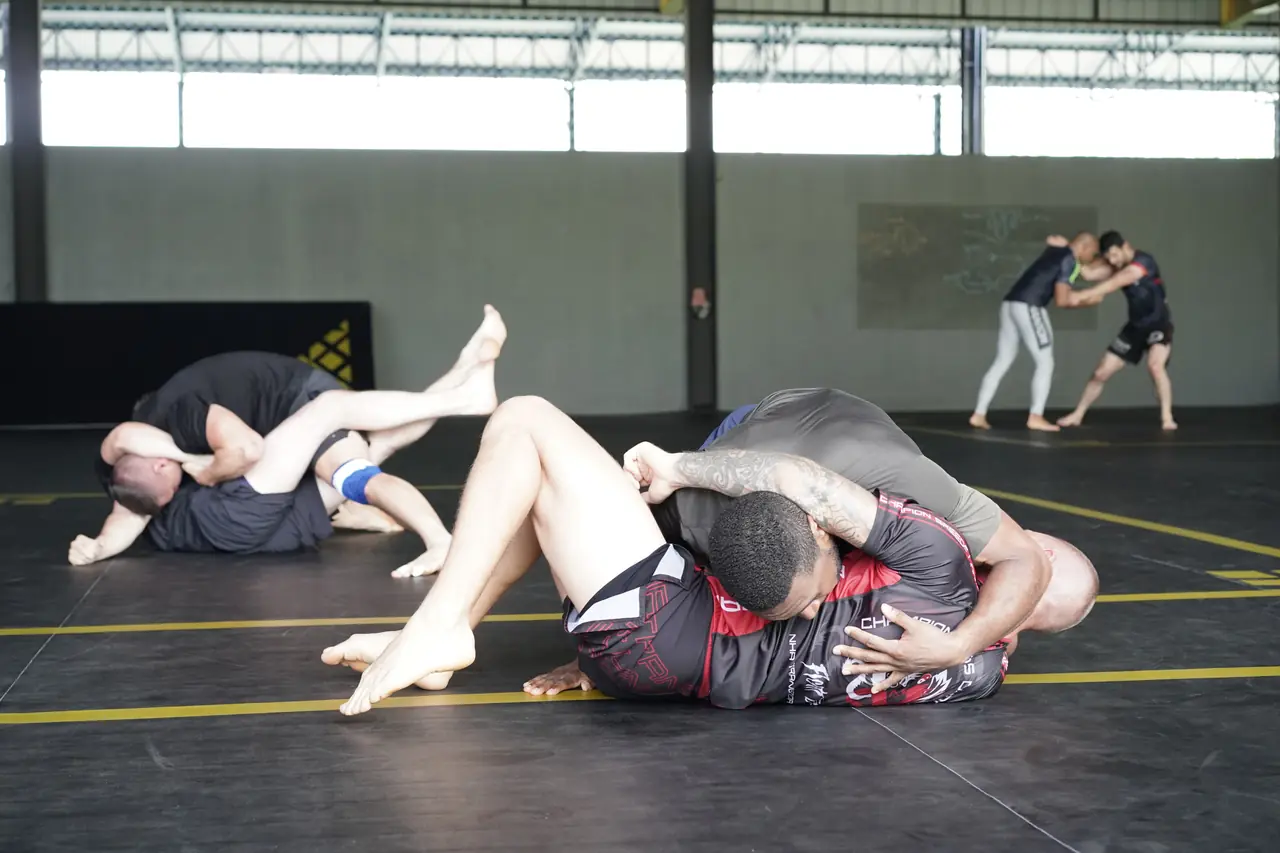
Tapping is an essential part of the process. Tap early and clearly when a submission is applied or when you feel unsafe; the person applying the technique must release immediately.
Good rolling is not measured by how hard someone can force every exchange. It is measured by whether both partners can train, learn and come back safely. Khunpon's classes progress from fundamentals and technical instruction to positional sparring and live rolling, with controlled resistance, efficient movement and long-term development at the centre.
How the BJJ belt system works
The adult BJJ ranking system usually runs:
- White belt.
- Blue belt.
- Purple belt.
- Brown belt.
- Black belt.
Stripes may be awarded between belts, depending on the academy. Promotion is normally decided by an instructor or a recognised lineage, and the criteria may include:
- Technical understanding.
- Positional awareness.
- Consistency.
- Problem-solving.
- Training behaviour.
- Applying techniques against resistance.
- Helping training partners learn safely.
Attendance alone does not decide a promotion, and a belt is not an objective measure of who would win every fight. It represents development within a particular academy, coaching system and lineage.
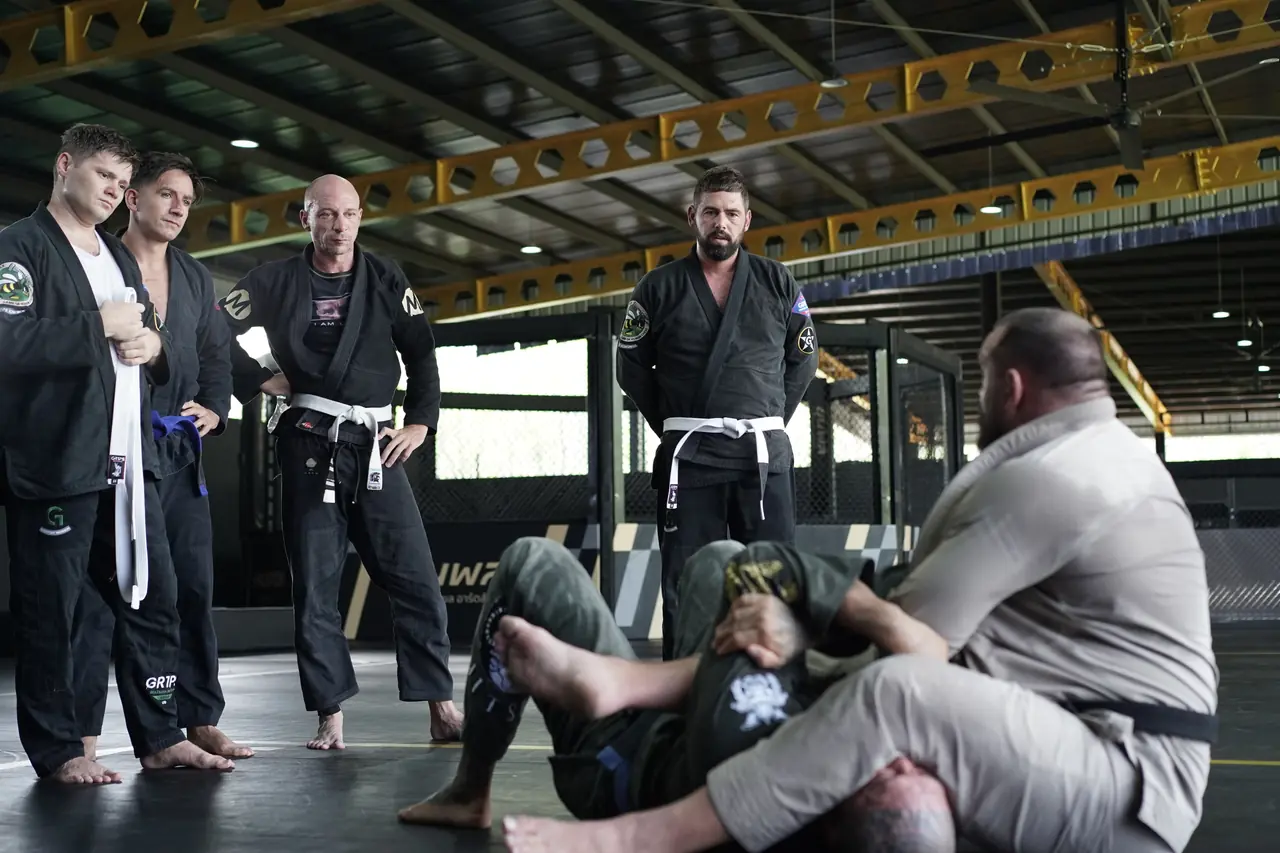
The IBJJF Graduation System covers progression from white belt through the black-belt degrees and later stages, and notes that its guidance can change as the sport develops. A degree on a black belt indicates seniority within a recognised system: a first-degree and a third-degree black belt are both black belts, but they represent different stages of experience and recognition. A "third-degree black belt" should not automatically be called a "third dan", because that term belongs to other martial-arts systems. The IBJJF system also includes later coral and red belt stages, which are advanced recognitions rather than awards for attendance.
At Khunpon, BJJ Head Coach Justin holds a third-degree black belt awarded under Olavo Abreu. That gives the programme a clear lineage, while each student's development still depends on coaching, consistency, training partners and individual effort.
How BJJ competitions are organised and scored
BJJ competitions are usually divided by:
- Weight.
- Age.
- Belt level.
- Gender.
- Gi or No-Gi format.
The exact divisions depend on the organiser. Under the IBJJF ruleset, competitors score through positional progressions such as:
- Takedowns.
- Sweeps.
- Guard passes.
- Knee-on-belly.
- Mount.
- Back control.
A submission ends the match immediately. If nobody submits, the winner may be decided by points, advantages, penalties or a referee decision.
A takedown rewards bringing an opponent to the ground while establishing control. A sweep reverses the position from underneath to take the top. A guard pass happens when the top player moves beyond the opponent's legs and establishes a dominant position. The current IBJJF Rule Book is the definitive source for its scoring and legal techniques.
These scores are not universal. ADCC uses its own scoring, time limits, negative points and submission-focused rules (ADCC official rules). The AJP Tour runs its own competition and ranking structure, including Gi and No-Gi divisions.
Submission-only events may remove points entirely, or use a decision if nobody submits. That changes the incentives: competitors focus less on collecting positional points and more on creating submission chances.
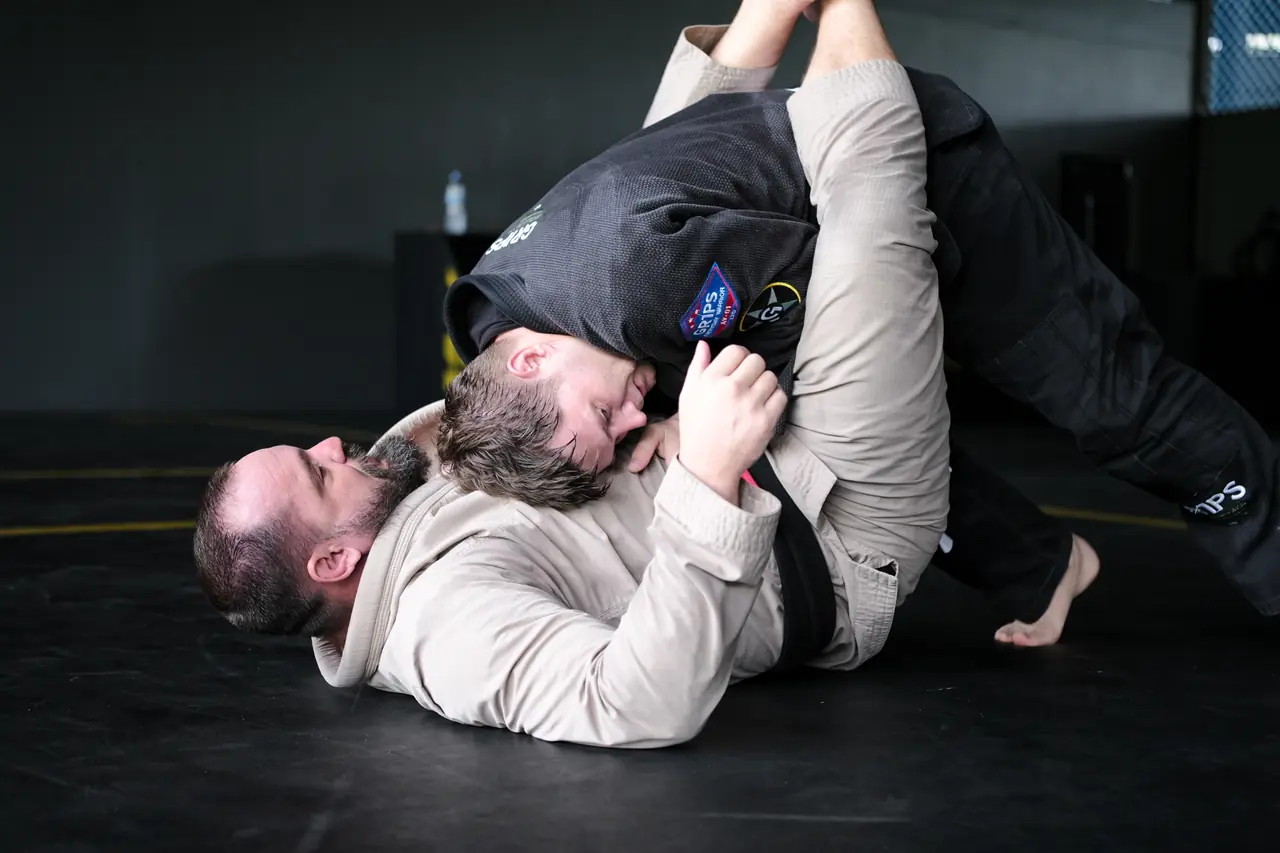
If you train at Khunpon with competitive ambitions, learning the rules is part of the preparation. A movement that works may not score the same way under IBJJF, ADCC, AJP or a local event.
BJJ competitions that matter internationally
IBJJF World Championships
The IBJJF World Championships are among the best-known points-based Gi competitions, and the organisation also holds a separate No-Gi World Championship. Its results archive distinguishes Gi, No-Gi and Masters events, and it runs an athlete-ranking system based on points from tournament placings.
ADCC Submission Fighting World Championship
ADCC is one of the most influential No-Gi submission-grappling competitions, with its own rules, time limits, scoring and penalties. Its championship statistics record winners across weight and absolute divisions going back to the early 2000s.
AJP Tour and the Abu Dhabi World Professional Championship
The AJP Tour is an international circuit with ranking events, professional divisions and the Abu Dhabi World Professional Jiu-Jitsu Championship. It is distinct from both IBJJF and ADCC, with its own event structure, ranking points and eligibility requirements, so check the details for each season and event.
CBJJ competitions
The Confederação Brasileira de Jiu-Jitsu, or CBJJ, is closely associated with the Brazilian competition structure and publishes rules, graduation material and federation information on the CBJJ website.
These competitions should not be squeezed into one universal hierarchy. IBJJF is strongly associated with points-based Gi and No-Gi competition, ADCC with elite No-Gi submission grappling, and AJP with its own international ranking and professional system. Each rewards different tactical decisions.
World-famous black belts and major lineages
BJJ has grown through many lineages, academies and influential people. It is more useful to understand their contributions than to argue over a definitive list of the greatest.
- Roger Gracie is associated with the Gracie lineage and is recognised by ADCC as a Hall of Fame figure, with documented success in both his weight division and the absolute division.
- Marcelo Garcia is in the ADCC Hall of Fame and appears prominently in its championship statistics. He is widely associated with influential No-Gi grappling and a distinctive approach to control and submissions.
- Kyra Gracie is in the ADCC Hall of Fame and is an important competitive figure in the growth and visibility of women's BJJ.
- Rafael Mendes is also in the ADCC Hall of Fame and is associated with highly technical lightweight grappling.
- André Galvão is in the ADCC Hall of Fame and is recognised as both a competitor and a team leader.
- Saulo Ribeiro, Renzo Gracie, Royler Gracie, Braulio Estima, Xande Ribeiro, Dean Lister and Ricardo Arona are among the other established figures ADCC lists.
The ADCC Hall of Fame is a useful starting point, and its statistics archive helps separate documented records from reputation. A person's lineage gives context about their technical background, but lineage alone does not guarantee teaching quality or a student's progress.
BJJ at Khunpon: lineage, coaching and community
Khunpon's BJJ programme offers Gi and No-Gi training in Phuket, with group classes and personal training for all ages and experience levels. It is connected to the lineage of Olavo Abreu: Khunpon's BJJ coach holds a third-degree black belt awarded under him. Olavo Abreu's Born to Roll profile describes him as a fifth-degree black belt under Carlson Gracie and an IBJJF-certified black belt.
A recognised lineage helps you understand where your technical instruction comes from. It does not replace good coaching, regular practice or the relationship between coach and student.
Khunpon also creates chances to learn beyond regular classes through seminars and special events. Read about the Olavo Abreu Gi seminar at Khunpon and the Sloan Clymer No-Gi seminar.
The most important part of any BJJ community is how people train together. Experienced practitioners create a safe learning environment for newer students, and beginners are encouraged to ask questions, communicate with their partners and learn without feeling they must prove themselves straight away. That is what makes Khunpon feel like a training family: not a slogan, but the daily habit of sharing the mats, respecting different goals and helping each other improve.
What learning BJJ at Khunpon involves
A beginner may start with posture, base, movement, frames, hip escapes, bridging and basic defensive positions. From there, training can develop through:
- Guard retention and guard passing.
- Takedown entries and defence.
- Side control, mount and back control.
- Escapes and reversals.
- Positional sparring.
- Submission mechanics and defence.
- Gi grip fighting.
- No-Gi hand fighting and body control.
- Live rolling.
Gi-focused students may spend more time on lapel, sleeve and trouser grips. No-Gi students may work more on underhooks, body locks, wrestling exchanges, leg entanglements and faster transitions.
MMA athletes can use BJJ to improve takedown defence, cage escapes, top control and submission awareness. Muay Thai and boxing practitioners can add grappling to their striking. Recreational members may simply enjoy the physical and mental challenge of a technical martial art.
Khunpon's group classes and PT sessions are open to anyone, of any age and any experience level. A complete beginner can start with the fundamentals, while an experienced grappler can use private training to fix technical weaknesses or prepare for a specific ruleset.
Why train BJJ in Phuket at Khunpon?
Phuket draws martial artists from many countries and backgrounds, which makes for a varied training community. For visitors, BJJ can be part of a short training stay. For residents, it can become a consistent long-term practice.
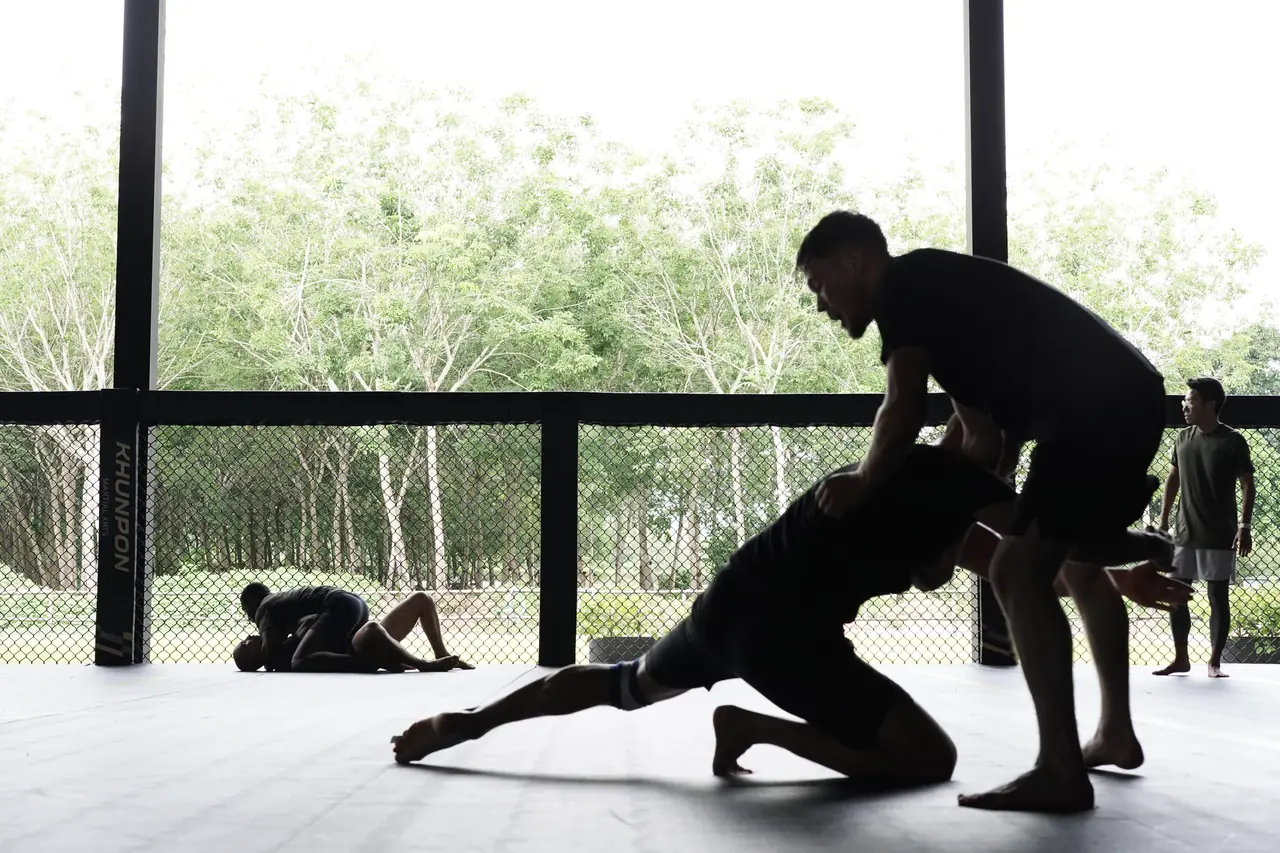
Training in Thailand also puts Brazilian Jiu-Jitsu next to the country's deep Muay Thai culture. At Khunpon that connection is practical rather than forced: you can train grappling, explore striking through Muay Thai or MMA, and support your development with strength and conditioning. The wider gym lets you specialise in grappling while understanding how it fits into the bigger martial-arts picture.
Khunpon welcomes complete beginners, recreational members, experienced practitioners and athletes with competitive goals. The emphasis is on learning properly, training safely and building skill through repetition and resistance.
Start training BJJ at Khunpon
Whether you are interested in Gi or No-Gi, completely new to grappling or already experienced on the mats, Khunpon Martial Arts is a welcoming place to train in Phuket, Thailand. No-Gi runs Monday to Friday and Gi on Tuesday and Saturday, with group classes and PT for all ages and levels.
Check the timetable, see prices and memberships, or message the team about the right class for you. Train with purpose, develop your technique and become part of the Khunpon community.
Glossary
- Brazilian Jiu-Jitsu
- A grappling martial art and combat sport focused on positional control and submissions.
- BJJ
- The common abbreviation for Brazilian Jiu-Jitsu.
- Gi
- The traditional jacket and trousers worn for Gi BJJ training and competition.
- No-Gi
- BJJ practised without the traditional uniform, usually in a rashguard and shorts.
- Roll
- Live BJJ practice against a resisting training partner.
- Guard
- A position in which you use your legs to control an opponent from underneath.
- Closed guard
- A guard with the legs locked around the opponent's torso.
- Open guard
- A guard using active legs, hooks and frames without locking the legs together.
- Passing
- Moving around or through an opponent's guard to reach a dominant position.
- Sweep
- Reversing the position from underneath to take the top.
- Side control
- A dominant position at the side of the opponent's torso after passing the guard.
- Mount
- A dominant top position sitting above the opponent's torso.
- Back control
- A position behind the opponent, usually with hooks or a body triangle.
- Takedown
- Bringing an opponent from standing to the ground while establishing control.
- Submission
- A choke or joint lock that makes an opponent tap or verbally concede.
- Positional sparring
- Live practice that starts from a specific position or situation.
- Underhook
- An arm placed underneath the opponent's arm to improve control.
- Lineage
- The documented line between instructors and the people they learned from and received rank from.
- Belt degree
- A recognised stage of seniority awarded after black belt in some BJJ graduation systems.
Sources and further reading16
- Kodokan Judo Institute. The History of Kodokan Judo.
- Cairus, José. Modernization, Nationalism and the Elite: The Genesis of Brazilian Jiu-Jitsu, 1905 to 1920. Tempo e Argumento, 2011.
- Green, Thomas A. and Svinth, Joseph R., eds. Martial Arts in the Modern World. Praeger, 2003.
- Drysdale, Robert. Opening Closed-Guard: The Origins of Jiu-Jitsu in Brazil. Independently published, 2020. ISBN 979-8680602287.
- International Brazilian Jiu-Jitsu Federation. Graduation System.
- International Brazilian Jiu-Jitsu Federation. Books and Videos, including the current Rule Book.
- International Brazilian Jiu-Jitsu Federation. Uniform.
- International Brazilian Jiu-Jitsu Federation. Athlete Ranking Information.
- International Brazilian Jiu-Jitsu Federation. Championship Results.
- ADCC Submission Fighting World Federation. Rules and Regulations.
- ADCC Submission Fighting World Federation. World Championship Statistics.
- ADCC Submission Fighting World Federation. ADCC Hall of Fame.
- Abu Dhabi Jiu Jitsu Pro. AJP Tour.
- Confederação Brasileira de Jiu-Jitsu. Official website.
- Born to Roll. Professor Olavo Abreu.
- Khunpon Martial Arts. BJJ in Phuket.