
People arrive at training with different goals. One wants general strength, another is preparing for HYROX, someone else needs the fitness for Muay Thai, MMA or BJJ. They do not all need the same exercises, the same loads or the same intensity.
Strength and conditioning is the broader framework for developing physical qualities such as strength, muscular endurance, aerobic fitness, power, coordination and control. At Khunpon Martial Arts in Phuket, that framework includes Circuit and HIIT classes through the week.
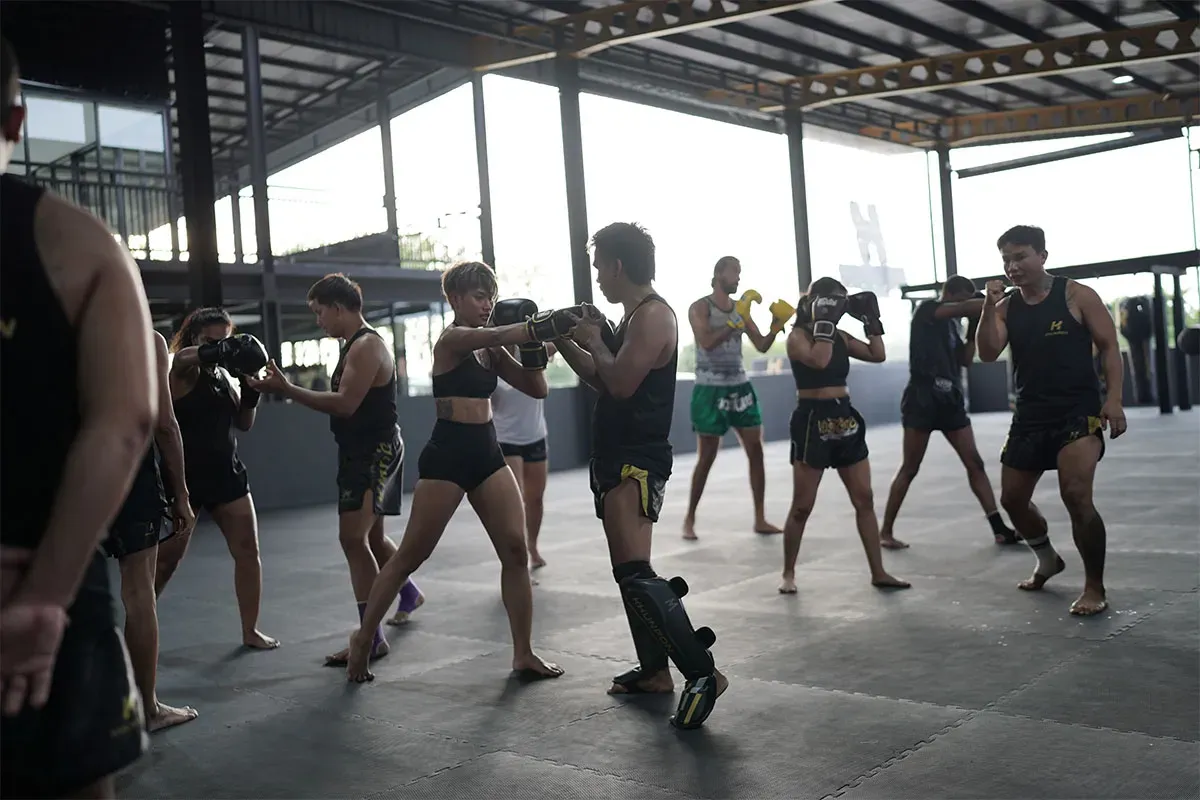
Circuit runs on Monday, Wednesday and Saturday and HIIT on Tuesday and Thursday, all from 09:30 to 10:30, for everyone from complete beginners to competing athletes. Friday's 09:30 slot is a HYROX class, and Sunday Shred takes Sunday morning. The formats differ, but both rest on the same principle: helping people train consistently and build useful physical capacity.
What is strength and conditioning?
Strength and conditioning is the planned development of physical qualities that support health, fitness or sporting performance.
Strength is the ability to produce force: lifting, pushing, pulling, carrying or controlling resistance. Conditioning is the ability to perform, and recover from, the physical demands that matter to you. It can include aerobic fitness, muscular endurance, repeated high-intensity efforts and keeping good movement while tired.
So S&C is broader than lifting heavy weights or "doing cardio". It may involve resistance exercises, bodyweight movements, running, rowing, carries, jumps, changes of direction and intervals.
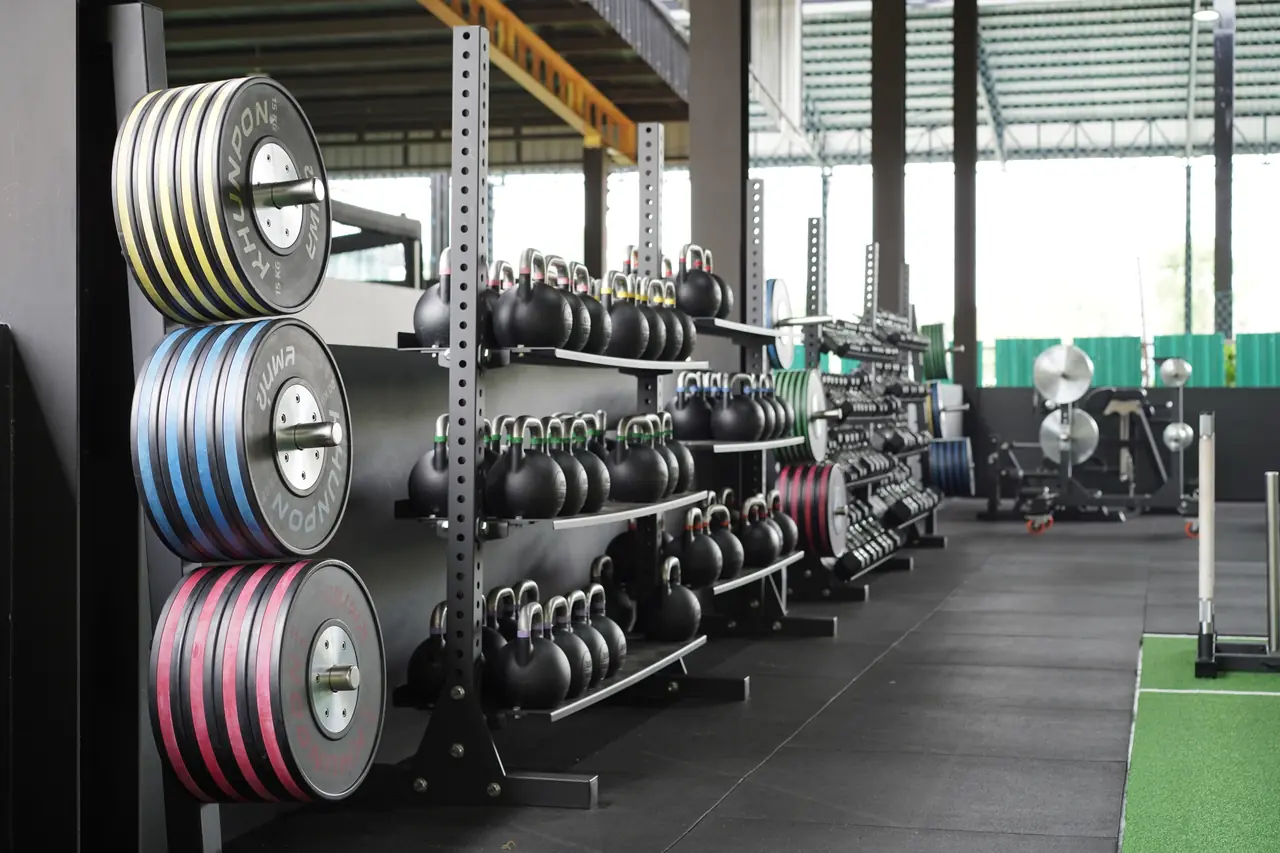
The right balance depends on the person and the goal. A beginner may need movement familiarity and confidence. A runner may benefit from strength work that supports their running. A HYROX athlete may need repeated combinations of running and functional exercises. A combat athlete may need physical preparation that complements technical practice. At Khunpon, Circuit and HIIT are two different ways to work on these qualities within the wider S&C programme.
What is Circuit training?
Circuit training describes how a session is organised. You move through a planned sequence of exercises or stations, usually completing a set number of reps or working for a set time before moving on. A general circuit might include:
- A squat variation.
- A pushing exercise.
- A pulling exercise.
- A carry.
- A single-leg movement.
- A trunk-control exercise.
- A conditioning station.
Those are general examples, not a fixed description of Khunpon's class content.
A circuit can emphasise resistance training, muscular endurance, conditioning, movement skill or a mix. The outcome depends on the exercises, the load, the work period, the rest period and the number of rounds.
Circuit training does not have to be frantic. A well-designed circuit lets people concentrate on technique, move with control and build work capacity without turning every station into a race. That makes it adaptable to a group with different levels of experience: one person uses a lighter load or simpler variation, another works with a greater challenge.
The modern form of circuit training is usually credited to R. E. Morgan and G. T. Adamson, who developed a systematic approach at the University of Leeds in the 1950s. Their method used a sequence of exercises so several people could train together while each worked at an appropriate level. Khunpon's Circuit classes use that broad concept as part of the weekly S&C programme.
What is HIIT?
HIIT stands for high-intensity interval training: repeated periods of relatively hard work separated by recovery.
"Relatively" matters. High intensity is judged against the person doing the exercise, so an interval that is properly demanding for a beginner may look different from one an experienced athlete uses.
HIIT can be built around running, rowing, cycling, bodyweight exercises, resistance movements or other activities. It does not need multiple stations, although a HIIT session can also be organised as a circuit. A HIIT session may involve:
- A work interval.
- A recovery interval.
- Several repeated rounds.
- A planned warm-up and cool-down.

The recovery period is part of the design. It lets you produce more quality efforts instead of treating the whole session as one continuous maximum effort.
HIIT is also different from sprint interval training, or SIT, which generally uses shorter, near-maximal efforts at higher intensities than conventional HIIT. Not every HIIT interval needs to be an all-out sprint.
Research reviews suggest HIIT can improve cardiorespiratory fitness, but the studies use different exercises, intensities, work periods and recovery structures, so the results should not be applied automatically to every class sold as HIIT. At Khunpon, HIIT is part of the broader S&C schedule, with challenging intervals adjusted to each person's experience and ability rather than an expectation that everyone trains at maximum.
Circuit or HIIT: what is the difference?
| Feature | Circuit training | HIIT |
|---|---|---|
| Defining feature | A sequence of exercises or stations | Repeated hard work intervals separated by recovery |
| Organisation | You move from one exercise to the next | You repeat work and recovery periods |
| Main focus | Resistance, conditioning, muscular endurance or movement skill | Often cardiorespiratory and repeated-effort conditioning |
| Recovery | Short, moderate or longer, depending on the design | Deliberately built into the interval structure |
| Exercise choice | Often several different exercises | One exercise or several |
| Intensity | Low, moderate or high | Relatively high, but not necessarily maximal |
| Overlap | A circuit can include HIIT intervals | HIIT can be arranged as a circuit |
Neither format is automatically better. A circuit describes how exercises are arranged; HIIT describes the relationship between work and recovery. The two can overlap: a circuit with high-intensity intervals at each station is a high-intensity circuit, and a HIIT workout can use a single movement, such as repeated running intervals, with no circuit at all. The training effect depends on the details.
Why offer both through the week?
Different formats give different training experiences while serving the wider goals of S&C.
Circuit training helps you practise a range of movement patterns in one session, with pushing, pulling, squatting, carrying, lunging and conditioning work. HIIT puts more emphasis on repeated hard efforts and recovery between them, and helps you practise working at a challenging pace without assuming every effort must be a sprint.
Offering both also gives members a choice. Some people enjoy moving through a variety of stations; others prefer the clear rhythm of work and recovery. You do not need to come every morning. The most useful routine is the one that fits your goals, experience, schedule and recovery.
Can beginners join Circuit and HIIT?
Yes. You do not need to reach some arbitrary level of fitness before joining. A class can be adjusted through:
- The exercise variation.
- The load.
- The pace.
- The work duration.
- The recovery time.
- The range of motion, where appropriate.
- The movement complexity.
A beginner may do fewer reps, use a simpler version of a movement or take longer to recover. An experienced member may use a heavier load, work for longer or choose a harder variation. The aim is not to match someone else's output. It is to do the work with control and build familiarity over time.
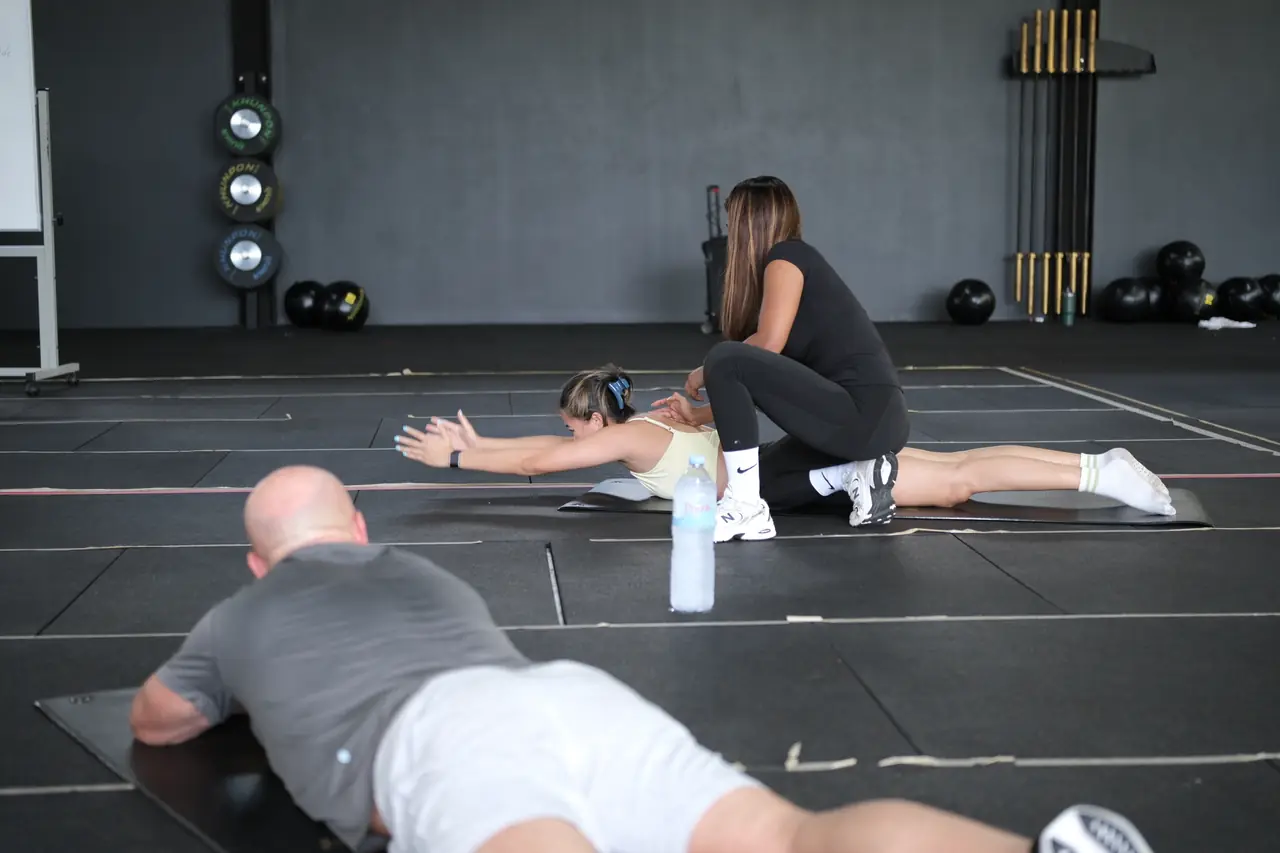
If you are returning to exercise, you may need a gradual reintroduction: previous ability does not always come back straight away, and the first goal may simply be regular attendance rather than maximum effort. Khunpon's S&C classes serve a community of complete beginners, recreational members and competing athletes, and you can talk to the team about your experience and goals before you start.
How can the same class challenge experienced athletes?
A group class can still give an experienced athlete a real challenge, but challenge does not always mean the heaviest load or the fastest pace. An experienced athlete may focus on:
- Higher-quality execution.
- More demanding movement variations.
- Appropriate loading.
- A sustainable work rate.
- More precise pacing.
- Holding technique under fatigue.
- Fitting the session around other training.
A demanding group class and an individually periodised performance programme are not the same thing. If you are preparing for a specific competition, you may need extra planning around your sport, training history, competition dates and recovery. Khunpon's group S&C classes support physical development, but attendance alone does not guarantee competitive improvement: progress depends on the wider training process and the individual.
What Circuit and HIIT can develop
Circuit and HIIT classes can develop several qualities, though not all equally.
| Quality | What it means | How it may appear in training |
|---|---|---|
| Muscular endurance | Repeating force over time | Repeated squats, carries or lunges |
| Aerobic fitness | Sustaining work and recovering between efforts | Running, rowing or repeated intervals |
| Strength | Producing force against resistance | Controlled loaded movements |
| Coordination | Organising the body efficiently | Multi-step or multi-joint exercises |
| Movement control | Holding position and technique | Squatting, hinging or single-leg work |
| Repeated-effort capacity | Hard efforts with recovery | Structured work-and-rest intervals |
Circuit training can develop strength or muscular endurance when the resistance and reps are right. HIIT can improve cardiorespiratory fitness when the intervals are demanding enough and done consistently. Neither should automatically be described as maximal strength or maximal power training: those usually need specific loading, exercise selection, recovery and intent. The American College of Sports Medicine's current resistance-training guidance stresses that load, volume and training style should reflect the person's goal.
How Circuit and interval training developed
Circuit training is usually traced to Morgan and Adamson's work at the University of Leeds in the 1950s, arranging exercises in a sequence so a group could train together while each person worked at their own level.
Interval training grew out of the broader history of endurance and athletic preparation, as athletes and coaches used repeated work and recovery to organise efforts more precisely than continuous exercise allows.
Modern fitness classes have adapted these ideas into many forms, using resistance stations, bodyweight exercises, machines, running or mixed movements. Today's Circuit and HIIT classes do not reproduce the exact protocols of historical studies: the labels describe broad formats, and the real training effect depends on how the session is designed. Khunpon uses these formats in a modern group setting to develop strength and conditioning for people with different goals.
The details that make training more effective
Rest is part of the session
Rest affects how much work you can do and how well you hold your technique. Short rest suits one objective; longer rest may be more useful for strength or power. A one-hour class is not sixty minutes of non-stop high-intensity exercise: warm-up, instruction, transitions, recovery and cool-down all have a place.
Load and effort are different
The weight is only one part of the training demand. Reps, tempo, range of motion, exercise order and recovery all change how hard an exercise feels. A lighter load done repeatedly can be a big muscular challenge, while a heavier load for fewer controlled reps is a different stimulus.
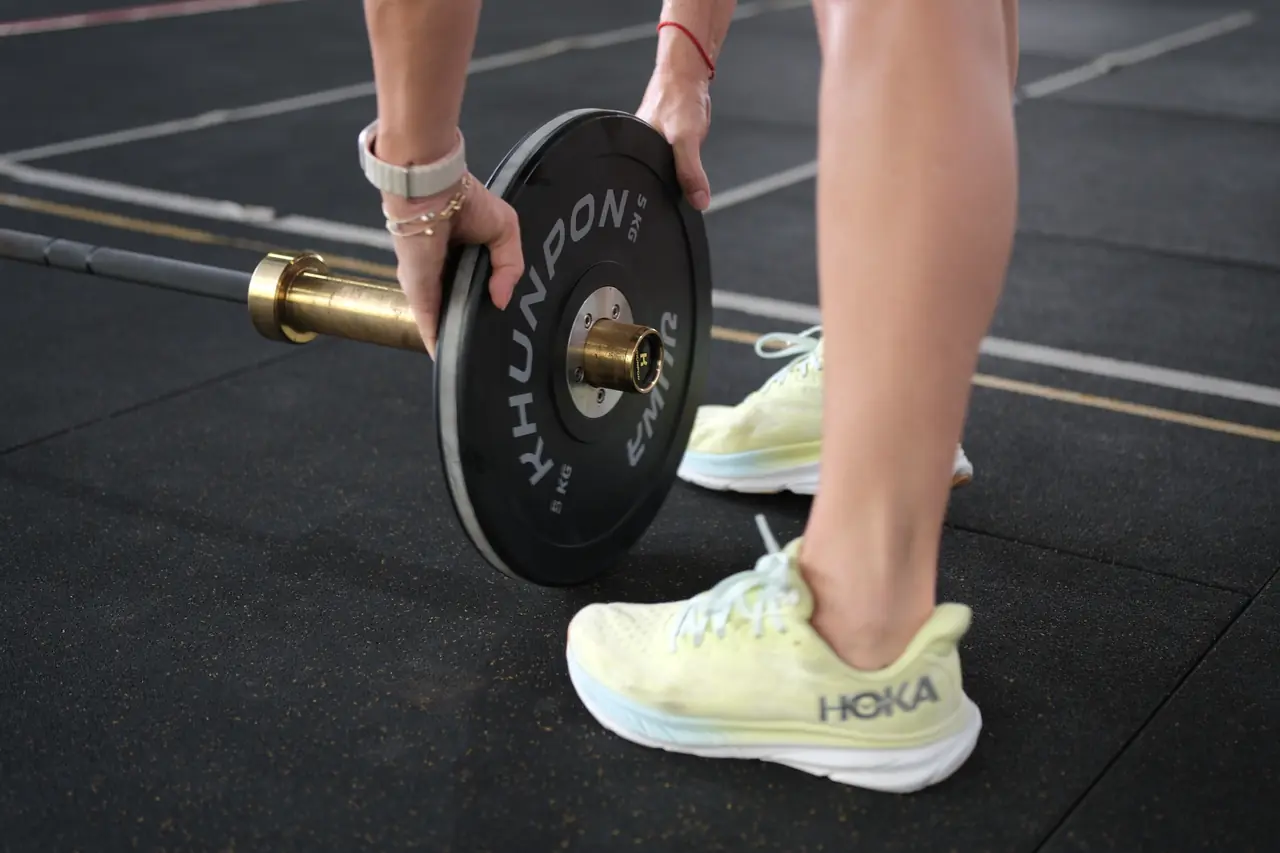
Pacing supports repeatable work
Starting too fast makes later efforts less controlled. That matters most in HIIT, where the aim is usually to repeat quality intervals rather than produce one exceptional effort followed by a sharp drop.
Progress does not always mean more weight
Progress may mean better control, more technically sound reps, a larger range of motion, more load, or handling the same work with less effort. Your body does not need every session to be harder than the last. It needs a training process that is consistent and appropriately challenging.
Fatigue can affect technique
As fatigue builds, movement quality can slip: posture goes, range of motion shortens, reps get rushed. That is one reason exercise selection, station order, rest and coaching matter. More complexity or speed is not better once control has gone.
Soreness is not a measure of success
You may be sore after unfamiliar exercise, but soreness is not a reliable measure of long-term progress, and nor are sweat or calories burned. Better questions: was the work appropriate, was technique maintained, and can you recover well enough to train again?
How S&C supports HYROX and martial arts
HYROX combines eight 1 km runs with eight functional stations, including the SkiErg, sled push, sled pull, rowing, carries, lunges and wall balls. Circuit and HIIT classes help develop qualities that matter in HYROX, including muscular endurance, repeated-effort capacity, leg strength and aerobic fitness, but they are not the same as HYROX training. Specific preparation also means practising the race sequence, stations, transitions and movement standards. Khunpon is an official HYROX Training Club, so you can use the whole gym according to your goals; our HYROX guide explains the race in detail.
Muay Thai, MMA and BJJ have their own technical and tactical demands. S&C complements them by developing force production, repeated-effort capacity, grip, trunk control and general conditioning. Research on combat sports identifies strength, power and anaerobic qualities as relevant, but those do not replace technical skill, timing, tactical awareness or live practice. At Khunpon, S&C sits alongside Muay Thai, MMA and BJJ, so athletes can build their physical preparation while staying part of a wider martial-arts community.
Recovery and sustainable progress
Training is only one part of adaptation. Recovery includes sleep, enough food and fluids, spacing out demanding sessions and easing off when needed. That matters most if you combine S&C with HYROX, running, martial arts or other activity: more sessions are not better if the total load becomes hard to recover from.
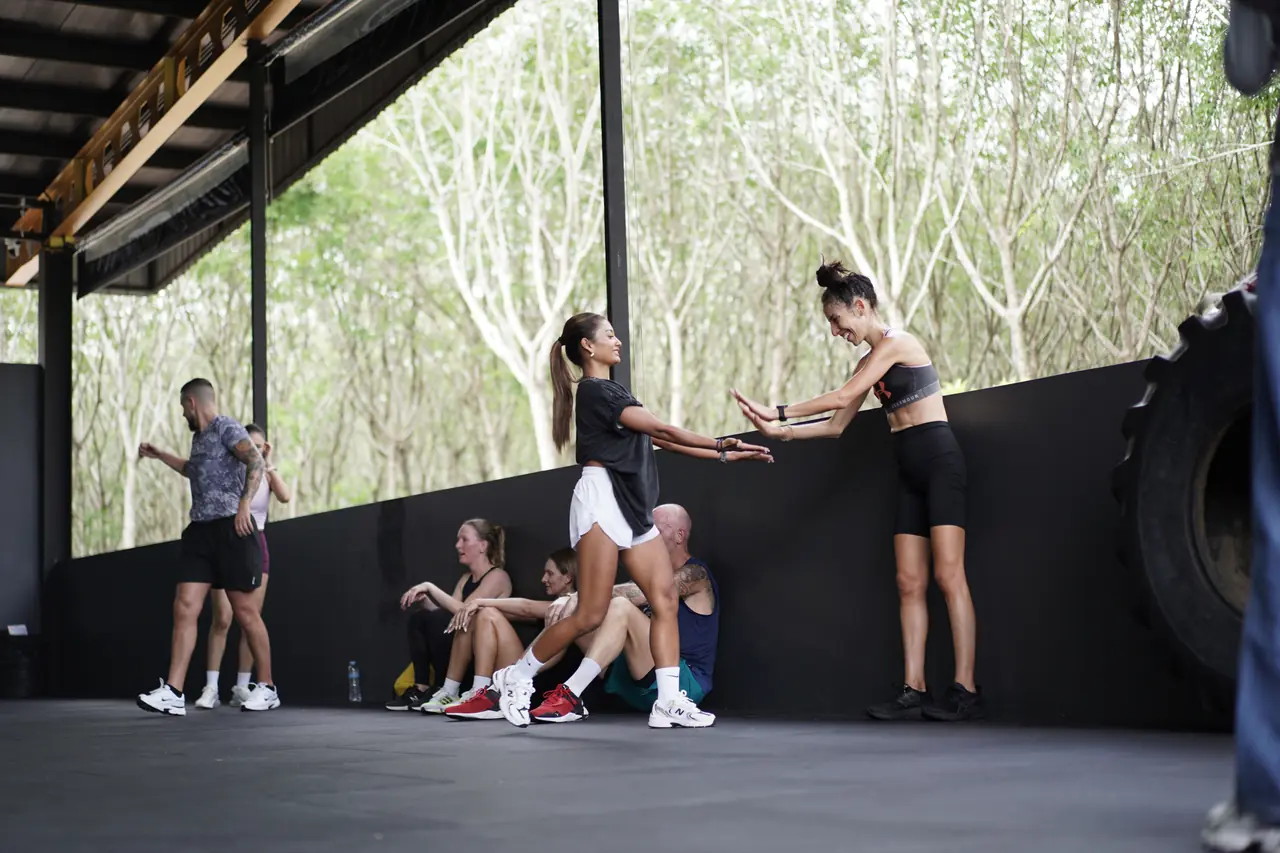
A sustainable routine might be one class a week or several, depending on the person. The goal is a pattern you can keep up over time. If you have a medical condition, significant pain or doubts about whether exercise is right for you, get individual advice from a qualified healthcare professional; a group-training article cannot replace a medical assessment or rehabilitation.
Fitness and group training in Thailand
There is no reliable national statistic showing a separate commercial boom in Circuit or HIIT training in Thailand. The broader public-health picture does show an ongoing need for accessible physical activity: the World Health Organization has highlighted physical-activity promotion in Thailand, and regional guidance recommends regular aerobic and muscle-strengthening activity across South-East Asia.
That matters for S&C because structured group training helps people turn good intentions into a regular routine. Phuket has a varied training population of local residents, visitors and people travelling specifically to train, and Khunpon gives them a place to take morning S&C classes alongside HYROX and martial-arts programmes.
Training Circuit and HIIT at Khunpon
Khunpon's strength and conditioning is split across Circuit and HIIT through the week:
- Circuit: Monday, Wednesday and Saturday, 09:30 to 10:30.
- HIIT: Tuesday and Thursday, 09:30 to 10:30.
- Sunday Shred: Sunday at 09:30.
The full week is on the timetable, and you can talk to the team about your experience and goals before you start. The classes are for a wide range of people:
- Complete beginners.
- People returning to exercise.
- Recreational gym members.
- Runners.
- HYROX athletes.
- Muay Thai practitioners.
- MMA and BJJ athletes.
- Competing athletes.
The same class can serve all of them by adjusting the exercise, load, pace, reps, work duration, recovery and movement complexity.
Why train S&C at Khunpon in Phuket?
Khunpon runs morning S&C six days a week, Sunday Shred included, inside a wider fitness and martial-arts gym. Members can combine S&C with:
- Circuit classes.
- HIIT classes.
- HYROX training.
- Muay Thai.
- MMA.
- BJJ.
- A community that runs from beginners to competing athletes.
- Khunpon Kitchen, the on-site café.
That gives people different ways to train. One member uses Circuit for general fitness and movement practice; another prefers HIIT intervals; a runner or HYROX athlete adds S&C to more specific conditioning; a martial artist uses it to support physical preparation around technical sessions.
Not every member needs the same programme, and not everyone needs to compete. The purpose of Khunpon's S&C is a structured, welcoming place where you can develop at the right level and build consistency over time. See the Strength & Conditioning programme or message the team to get started.
Strength and conditioning glossary
- Strength and conditioning
- The planned development of physical qualities for health, fitness or sporting performance.
- Circuit training
- Moving through a planned sequence of exercises or stations.
- HIIT
- High-intensity interval training: repeated hard efforts separated by recovery periods.
- Sprint interval training
- Interval training with shorter, near-maximal efforts than conventional HIIT.
- Work interval
- The period in which the main effort is performed.
- Recovery interval
- The planned rest or lower-intensity movement between work intervals.
- Muscular endurance
- The ability to produce force repeatedly over time.
- Aerobic fitness
- The ability to sustain activity and recover between efforts.
- Progressive overload
- Gradually increasing an appropriate training demand over time.
- Training volume
- The total amount of work performed.
- Training intensity
- How demanding the work is, shaped by load, speed, effort and duration.
- Perceived exertion
- Your own rating of how hard an effort feels.
- Concurrent training
- Developing strength and endurance within the same programme.
Sources and further reading15
- Sands, W. A. et al., National Strength and Conditioning Association. Basics of Strength and Conditioning Manual, 2012.
- American College of Sports Medicine. ACSM Unveils Landmark 2026 Resistance Training Guidelines, 2026.
- Currier, B. S. et al. Resistance Training Prescription for Muscle Strength and Hypertrophy in Healthy Adults. British Journal of Sports Medicine, 2023.
- Bull, F. C. et al., World Health Organization. WHO Guidelines on Physical Activity and Sedentary Behaviour, 2020.
- Huiberts, R. O. et al. Concurrent Strength and Endurance Training: A Systematic Review and Meta-analysis. Sports Medicine, 2024.
- Morgan, R. E. and Adamson, G. T. Circuit Training, second edition. G. Bell, 1965.
- Campbell, W. W. et al. Evidence-Based Effects of High-Intensity Interval Training on Exercise Capacity and Health, 2021.
- Hu, Y. et al. Effects of High-Intensity Interval Training Versus Sprint Interval Training on Factors Related to Endurance Performance, 2020.
- James, L. P. et al. A Systematic Review of Combat Sport Literature. Sports Medicine, 2016.
- Cid-Calfucura, I. et al. Effects of Strength Training on Physical Fitness of Olympic Combat Sports Athletes, 2023.
- Vasconcelos, B. B. et al. Effects of High-Intensity Interval Training in Combat Sports, 2020.
- HYROX. About the Race and current rulebooks.
- World Health Organization. Thailand's Physical Activity Drive is Improving Health by Addressing NCDs, 2017.
- World Health Organization South-East Asia Regional Office. Physical Activity.
- Khunpon Martial Arts. Strength & Conditioning in Phuket and class timetable.